Bear Blend — Celebrating Life Through Ritual
Bear Blend
Sign In Create Account Cart

Ginkgo Biloba

(Ginkgo biloba)

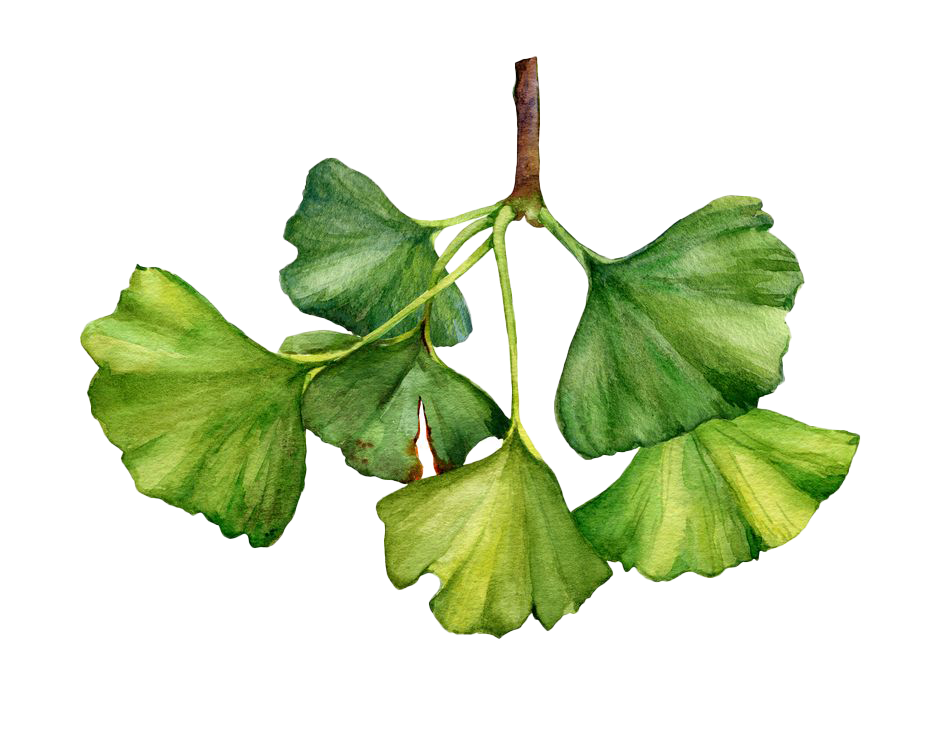
Ginkgo Biloba botanical illustration

fig. 16 Ginkgo biloba

Ginkgo biloba is a tree that makes a quiet mockery of human history. It was already ancient when the dinosaurs were young — a species so unchanged over 270 million years that paleobotanists call it a living fossil, the sole survivor of an entire plant division that otherwise exists only in stone impressions. Walk past a ginkgo on a city street and you are, without ceremony, standing next to one of the oldest life forms on Earth. It earns a second look.

The tree is instantly recognizable: fan-shaped leaves notched at the center, turning a clean, luminous gold each autumn before dropping all at once — sometimes within a single day, as if the tree decided collectively to let go. It grows tall and unhurried, can live for more than a thousand years, and has been documented surviving conditions that level most other organisms. Its resilience isn't metaphor; it's geological record.

In herbal tradition, ginkgo leaf is the part most widely worked with — dried, prepared as tea, and increasingly explored as a smokable herb prized for its clarity and its peculiar way of sharpening the edges of the present moment. The tree gives freely, and people have been receiving that gift for a very long time.

across time

Tradition & Ritual

Ginkgo's longest continuous relationship with humans is rooted in China, where it has been cultivated for at least a thousand years — possibly much longer — around Buddhist and Taoist temples. The monks who planted those trees were making a statement about time: the ginkgo's near-immortality made it a fitting guardian of sacred ground, a living embodiment of persistence and spiritual longevity. Many of those original temple trees still stand today.

In Chinese traditional medicine, ginkgo seeds (called bai guo, or white fruit) were the primary preparation for centuries, used in ceremonial and medicinal contexts for respiratory and kidney vitality. The leaf became prominent in Western herbalism considerably later, following 20th-century research interest, but in East Asia the leaf had its own quiet ceremonial life — pressed, gifted, and contemplated as a symbol of dual unity, the two-lobed leaf representing the meeting of opposites.

Japanese culture absorbed the ginkgo deeply. It became the official symbol of Tokyo and appears on the family crests of noble houses. The tree's capacity to survive catastrophe — several ginkgos were among the very few living things to survive the atomic bombing of Hiroshima in 1945, resprouting the following spring within their charred shells — elevated it to near-mythological status as a symbol of endurance, hope, and the stubborn continuity of life. In Korean tradition, ginkgos mark the sites of Confucian academies, standing as witnesses to the pursuit of wisdom across generations.

As a smokable or ceremonial botanical, ginkgo leaf has been used in contemplative practice to support mental clarity and focus — the kind of quiet, present attention that sits at the center of meditation and ritual work. It is an herb that invites you to slow down and see clearly, which is perhaps exactly what a 270-million-year-old tree would have to teach.

what it offers

Scientific & Medicine

Ginkgo biloba leaf is among the most studied botanical substances in modern pharmacological research. The primary active constituents are flavonoid glycosides (including quercetin, kaempferol, and isorhamnetin derivatives) and terpenoid lactones — specifically ginkgolides and bilobalide — which appear to be unique to this species and found nowhere else in the plant kingdom. Standardized ginkgo leaf extracts (most commonly labeled GBE or EGb 761) have been the subject of hundreds of clinical investigations, particularly around cognitive function and circulation.

Research has explored ginkgo's effects on cerebral blood flow, platelet aggregation, and antioxidant activity. Some well-designed trials suggest benefits for age-related cognitive decline and conditions affecting peripheral circulation; others have returned more mixed results, and the evidence base continues to be refined. What most researchers agree on is that the mechanism is real and interesting — ginkgo appears to act on multiple pathways simultaneously, which is characteristic of complex botanical compounds rather than isolated pharmaceutical agents.

Traditional Chinese medicine used ginkgo seed preparations for respiratory support and as a tonic for the lungs and kidneys. The leaf in smokable form is used by modern herbal practitioners as part of blends intended to support mental clarity and focus — a use that echoes the contemplative contexts in which the tree has historically been cultivated. As always, this is informational territory, not medical advice; anyone with specific health questions should consult a qualified practitioner.

the old stories

Legends & Myths

The Chinese name for ginkgo — yín xìng (银杏), silver apricot — is practical and affectionate. But the older poetic name, gong sun shu, translates roughly as "grandfather-grandchild tree," a reference to the belief that a man who plants a ginkgo will not live to harvest its fruit; only his grandchildren will. It is a tree for the long view, a living instruction in patience and generational continuity.

In Japanese Buddhist tradition, the ginkgo is sometimes called icho, and several temple trees are regarded as sacred presences in their own right — not merely decorations of a holy site but participants in it. One tree at Zenpuku-ji temple in Tokyo is said to have been planted by the monk Kukai (Kobo Daishi) himself in the 9th century CE, making it over 1,200 years old. Whether or not the legend holds precisely, the tree does stand, and it is very old.

The Hiroshima ginkgos carry perhaps the most resonant modern legend. Six trees survived the atomic blast of August 6, 1945, at distances of between 1 and 2 kilometers from the hypocenter. All other vegetation in the vicinity was destroyed. By spring 1946, the ginkgos were putting out new buds. The trees were left in place during reconstruction as living monuments; several still stand, bearing small plaques that read simply: "No more Hiroshima." A tree that has survived 270 million years of mass extinctions, ice ages, and continental drift apparently also survived the worst thing the 20th century could produce. Make of that what you will.

In European herbal folklore, ginkgo arrived late — it was introduced to Western botany in the 17th century by the German botanist Engelbert Kaempfer, who encountered it in Japan and brought it back to Europe, where it was initially grown as a horticultural curiosity. The famous German poet Goethe wrote a poem about the ginkgo leaf in 1815, Ginkgo biloba, meditating on the two-lobed leaf as a symbol of the self and the other, the individual and the beloved, the one that is also two. It remains one of the more botanically-specific love poems in the Western canon.

from the bear

Bear Originals

Ginkgo biloba holds a particular place in our herb library because it embodies something we find worth returning to again and again: the idea that plants carry their own intelligence, accumulated across timescales that make human history look like a long weekend. A tree that has remained essentially unchanged for 270 million years is not doing something wrong. It is doing something profoundly, stubbornly right.

We carry ginkgo biloba as a single herb and work with it in blends oriented toward clarity, focus, and contemplative presence — the kind of mental quality that supports meditation, ceremony, and the simple practice of paying attention. It pairs naturally with other herbs in our catalog that share that clarifying, grounding energy. If you're building your own blend or exploring the HERBALICIOUS smokable herb kit, ginkgo is worth understanding on its own terms before you start combining.

Our sourcing, as with everything we offer, follows our commitment to certified-organic, ethically traceable botanicals. The herb arrives here having been treated with the respect it's owed — which feels like the minimum courtesy you extend to something that was already ancient before the first flower ever bloomed. For a deeper look at how we think about smokable herbs generally, the ancient roots of herbal smoking is a good place to start.

Cautions & Contraindications

Ginkgo biloba is generally well-tolerated, but a few genuine cautions are worth knowing. The most significant involves blood thinning: ginkgo has well-documented antiplatelet and anticoagulant properties, which means it can interact with blood-thinning medications such as warfarin, aspirin in therapeutic doses, and certain NSAIDs. Anyone on anticoagulant therapy should consult a healthcare provider before using ginkgo in any form.

Ginkgo should be used with caution by people with bleeding disorders or those scheduled for surgery. It is generally not recommended during pregnancy. Some individuals report headache, gastrointestinal upset, or allergic skin reactions, particularly with concentrated extracts; these are less commonly reported with whole leaf preparations but worth noting.

Importantly: ginkgo seeds and fruit pulp are toxic and should not be consumed raw. The toxic constituent, 4-O-methylpyridoxine (MPN), can cause serious neurological effects. This is entirely distinct from the leaf, which is the part used in smokable and extract preparations. The leaf does not carry this risk, but it is worth knowing the distinction clearly.

As with any herb, if you are pregnant, breastfeeding, managing a health condition, or taking prescription medications, consult a qualified healthcare practitioner before incorporating ginkgo into your practice.
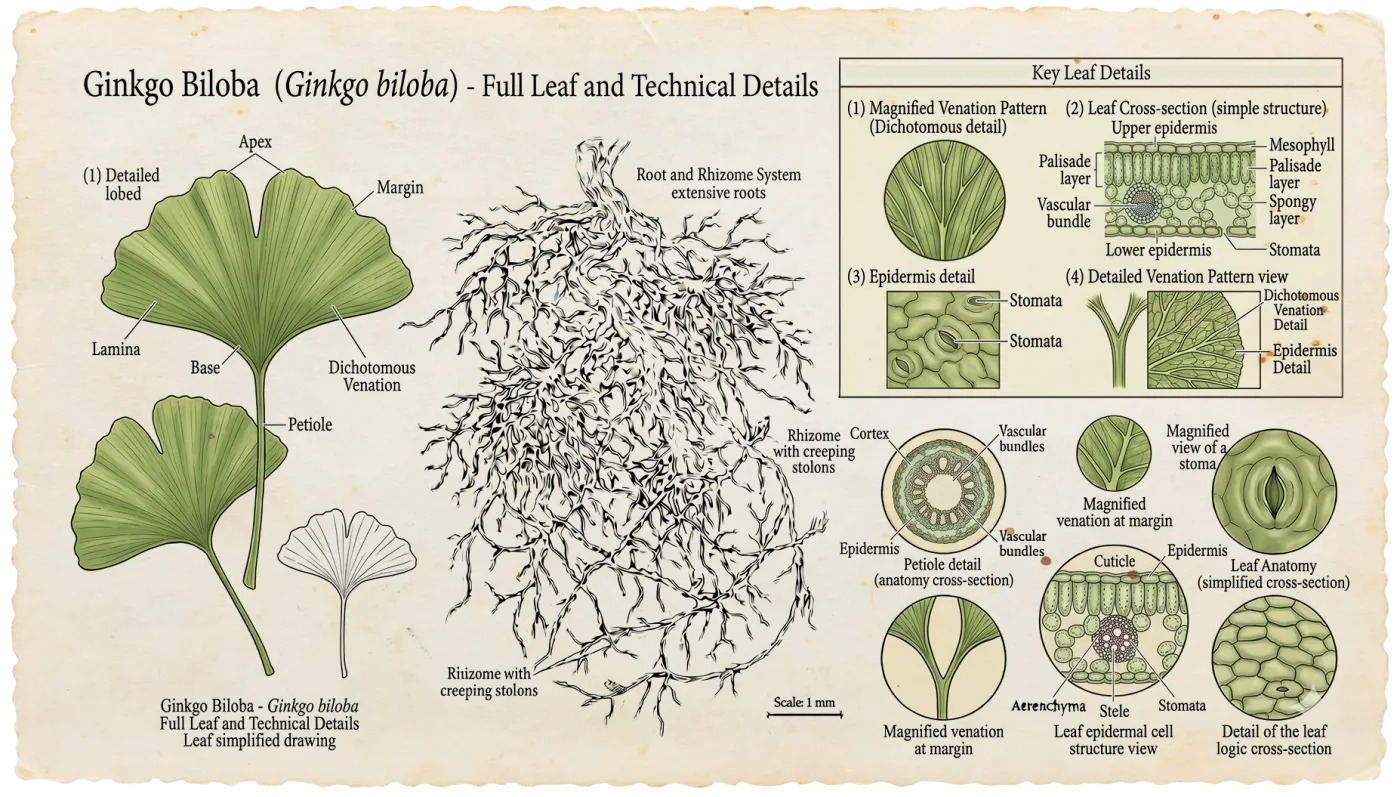
Botanical plate of Ginkgo Biloba (Ginkgo biloba)
of

of