Bear Blend — Celebrating Life Through Ritual
Bear Blend
Sign In Create Account Cart

Hemp Flower

(Cannabis sativa)

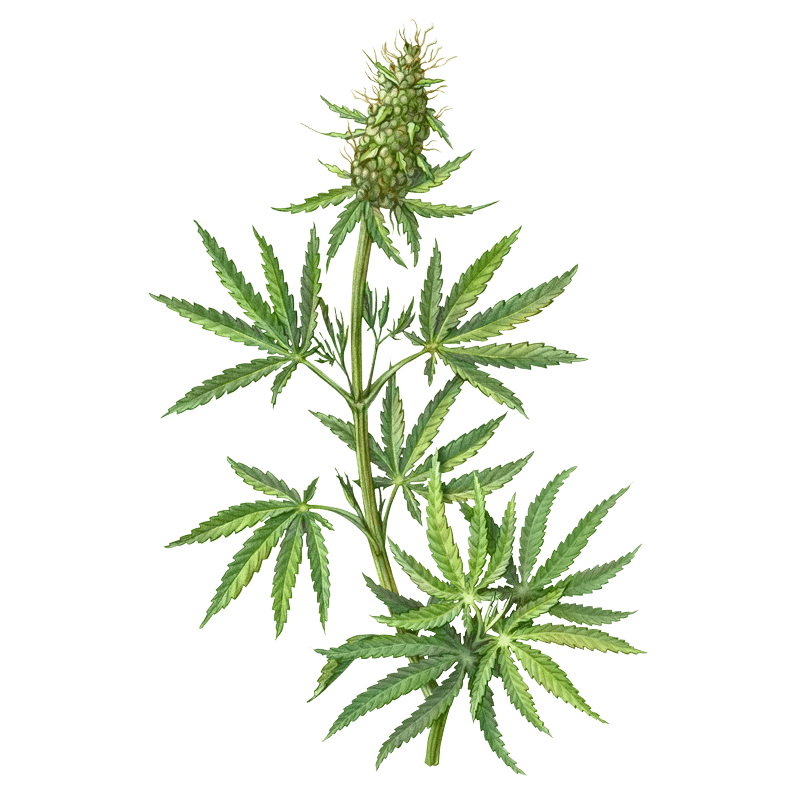
Hemp Flower botanical illustration

fig. 35 Cannabis sativa

Hemp is one of the oldest cultivated plants on the planet — older than most civilizations, older than writing, older, arguably, than the idea of agriculture itself. Cannabis sativa has been growing alongside human beings for so long that some ethnobotanists wonder, only half-jokingly, which species domesticated which. The hemp flower is the blooming top of the female plant: resinous, aromatic, and dense with the botanical chemistry that has made this plant a companion, a medicine, a fiber, a food, and a sacrament across nearly every culture that has ever encountered it.

What separates hemp flower from its more notorious cousin is largely a matter of one molecule — THC, the compound responsible for psychoactive effects. Hemp flower, by legal definition, contains 0.3% THC or less, while carrying meaningful concentrations of CBD (cannabidiol) and a broad spectrum of other cannabinoids, terpenes, and flavonoids. The aroma alone — earthy, floral, faintly spiced — is its own kind of invitation. This is a plant that announces itself before you even light it.

Smoked or vaporized, hemp flower offers a ritual experience remarkably similar to cannabis: the slow draw, the breath, the moment of release. For many people, that ritual is the point. The body and the habit of ceremony know what they need, and hemp flower meets them there without the psychoactive freight.

across time

Tradition & Ritual

The ceremonial and practical history of Cannabis sativa stretches back at least 10,000 years. Some of the earliest confirmed evidence of hemp cultivation comes from archaeological sites in China and Taiwan, where hemp cord impressions appear on pottery from the Neolithic period. By 2700 BCE, Chinese medical texts attributed to the Emperor Shennong were already documenting cannabis as a medicine. That is a tradition older than the pyramids.

In the ancient Near East and across Central Asia, cannabis — hemp and its higher-THC relatives — figured prominently in religious and shamanic ceremony. Herodotus described Scythian warriors inhaling cannabis vapor in enclosed tents as part of purification rituals after burial rites. Archaeologists have since found braziers and hemp seeds at Scythian burial sites, confirming that the old Greek historian was not, for once, exaggerating. In the Hindu tradition, bhang — a preparation of cannabis leaves and flowers — is closely associated with the god Shiva and consumed during the festival of Holi and on Shivaratri, a practice with roots deep in the Vedic period.

Indigenous traditions across the Americas, Africa, and South Asia have their own long relationships with hemp and cannabis as ceremonial plants. What runs through virtually all of them is a shared understanding: this is a plant that opens something. A threshold plant. Something that, in the right context and with the right intention, helps the human being cross from the ordinary into the attended.

what it offers

Scientific & Medicine

The modern science of hemp flower is, in a very real sense, the science of the endocannabinoid system — a vast receptor network distributed throughout the human body and brain that wasn't even formally identified until the 1990s. The system is named after cannabis because cannabis compounds were the key that revealed it. What that means, if you sit with it, is quietly astonishing: we discovered an entire internal regulatory system in the human body because we followed the chemistry of this plant. The endocannabinoid system governs mood, memory, appetite, immune response, inflammation, and sleep, among much else.

CBD, the primary active compound in hemp flower, interacts with this system in ways that researchers are still actively mapping. Unlike THC, CBD does not bind directly to the main cannabinoid receptors (CB1 and CB2) in an agonistic way; instead it modulates them, influencing how other molecules bind and how the system calibrates itself. Preliminary research has explored CBD's potential in relation to anxiety, inflammation, epilepsy (the FDA-approved drug Epidiolex is CBD-based), and sleep quality — though it is worth noting clearly that most research is still early-stage and no medical claims should be drawn from it. The full-spectrum nature of hemp flower — carrying hundreds of terpenes, flavonoids, and minor cannabinoids alongside CBD — is thought by many researchers to produce an "entourage effect," where the whole plant matrix works more richly than any isolated compound alone.

Smoked or vaporized hemp flower delivers cannabinoids to the bloodstream with a speed and bioavailability that edible preparations cannot match, which is one reason inhalation has remained a preferred method across millennia of use.

the old stories

Legends & Myths

In Hindu mythology, hemp is said to have arisen directly from the churning of the cosmic ocean — the great event in which gods and demons cooperated to churn the primordial waters and bring forth the treasures of creation. Cannabis emerged from this churning as one of the sacred nectars, and Shiva himself is said to have been its first devotee, resting beneath a cannabis plant after a great battle and consuming its leaves to restore his strength. This is not a minor footnote in the tradition; Shiva is one of the principal deities of the Hindu pantheon, and cannabis's association with him lends it a cosmological weight that still echoes in festivals and temples today.

In medieval Islamic alchemy and Persian poetry, hashish — the concentrated resin of the cannabis plant — appears in the literature of mystical experience, sometimes condemned, sometimes celebrated, always understood as something that moves the boundary between the self and the infinite. The Sufi poets were not indifferent to it.

In European folklore, hemp seeds were used in divination, particularly by unmarried women seeking to learn the identity of their future husbands. On Midsummer Eve or Halloween, a girl might scatter hemp seeds in a field while chanting a rhyme, then look over her shoulder expecting to see the vision of her intended. Whether the ritual worked is perhaps less interesting than the fact that it assigned hemp a role as a plant of vision, of threshold-crossing, of knowing what the ordinary mind cannot see — a thread that connects it to traditions spanning half the globe.

from the bear

Bear Originals

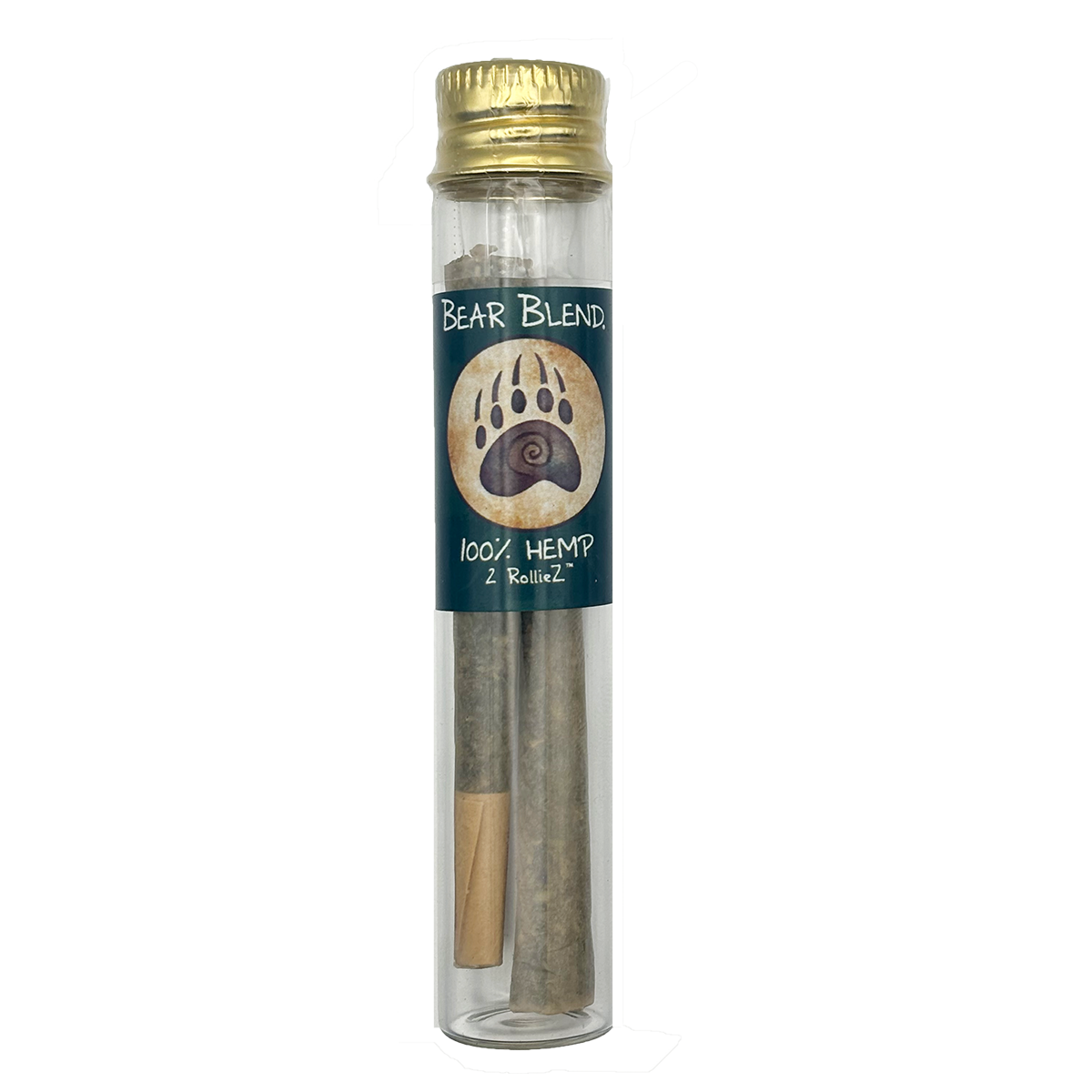
Hemp flower holds an honest and uncomplicated place in the Bear Blend catalog. We carry it as both a full-spectrum hemp flower and as 100% hemp flower Rolliez — pre-rolled and ready for the ritual, no assembly required. For those who prefer to work with it loose, it blends naturally with other herbs for a richer ceremonial smoke.

Our sourcing follows the same standard that runs through everything we do: certified-organic, ethically grown, traceable. Hemp, perhaps more than any plant, rewards this kind of attention — the terpene profile of a well-grown hemp flower is a living record of the soil, the sun, and the hands that tended it. Industrial hemp grown for maximum yield and minimum care is a different creature entirely from a carefully cultivated ceremonial flower. We are interested in the latter.

The ritual context we bring to hemp flower is simple: slow down, breathe, arrive. Whether you are rolling it alone, blending it with other herbs from our single-herb catalog, or reaching for a pre-roll before a meditation or ceremony, the invitation is the same one this plant has been extending to human beings for ten thousand years. You don't have to do anything elaborate. The plant already knows its part.

Cautions & Contraindications

Hemp flower contains very low levels of THC (0.3% or less by dry weight under US federal standards), but individuals who are particularly sensitive to cannabinoids may notice mild effects. Those subject to drug testing should be aware that even trace THC from full-spectrum hemp products can, in some cases, accumulate with regular use and trigger a positive result — this is worth taking seriously if your circumstances require it. See our FAQ on drug testing for more detail.

As with any smoked material, inhalation of combustion byproducts carries inherent respiratory considerations. People with asthma, chronic respiratory conditions, or other pulmonary concerns should consult a qualified healthcare provider before smoking any herb, hemp flower included. Pregnant or breastfeeding individuals are advised to avoid hemp flower and to seek guidance from a healthcare professional — see our FAQ on use during pregnancy. Hemp flower may interact with certain medications, particularly those processed by the liver's cytochrome P450 enzyme system; if you take prescription medications, a conversation with your doctor is worthwhile before adding CBD-rich hemp to your routine.
take it home

Buy Hemp Flower

Pure, organic Hemp Flower available in our shop.

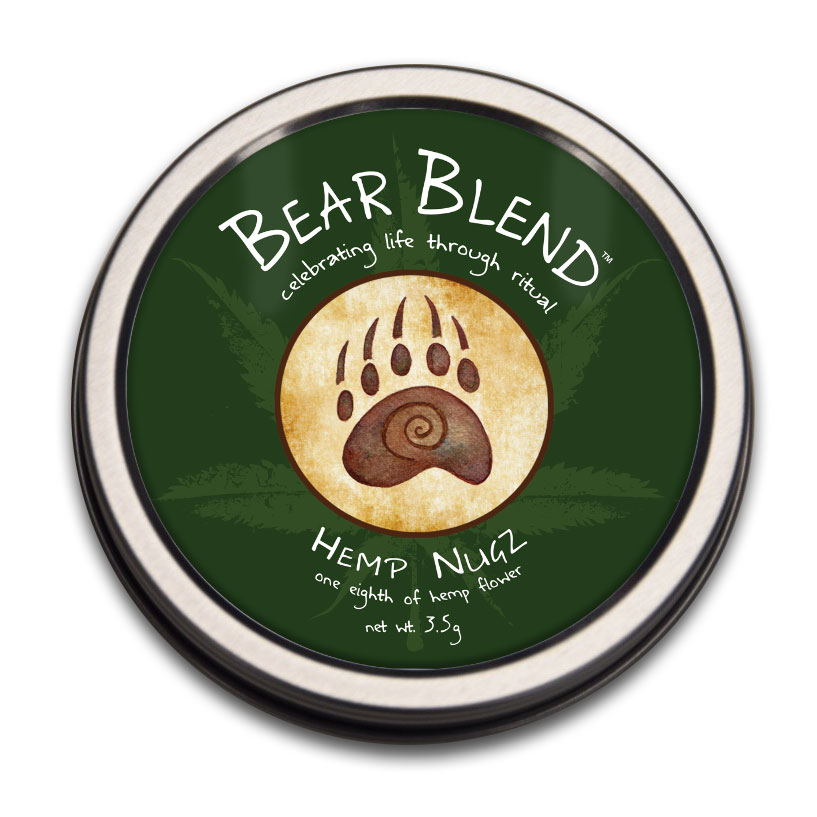
Shop Hemp Nugz — Full Spectrum Hemp Flower · $25.95 →
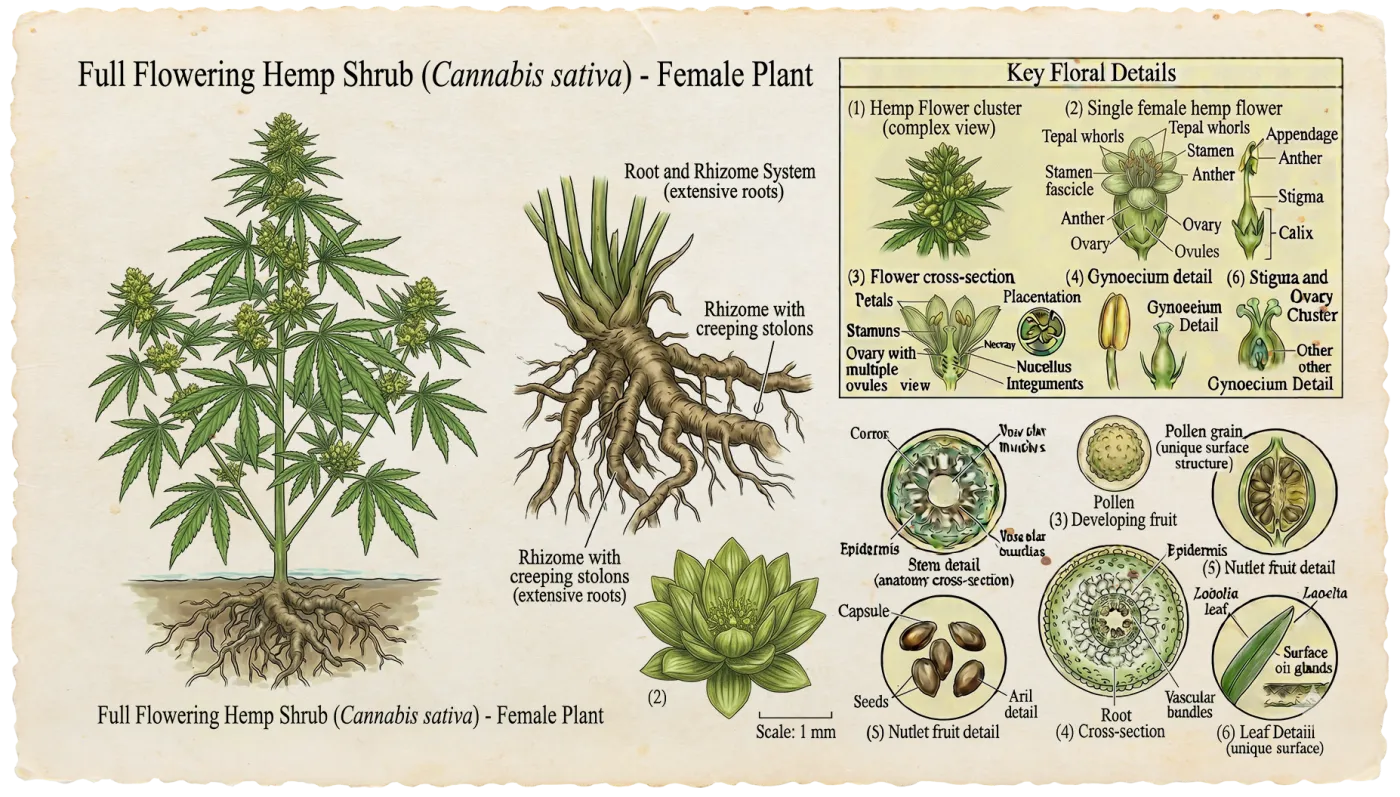
Botanical plate of Hemp Flower (Cannabis sativa)
of

of

cookies & such

We use essential cookies to run the shop (cart, checkout, sign-in) and, with your OK, analytics cookies to understand how folks use the site. See our Privacy Policy.