
Bear Blend — Celebrating Life Through Ritual
Bear Blend
Sign In Create Account Cart

Rosemary

(Salvia rosmarinus)

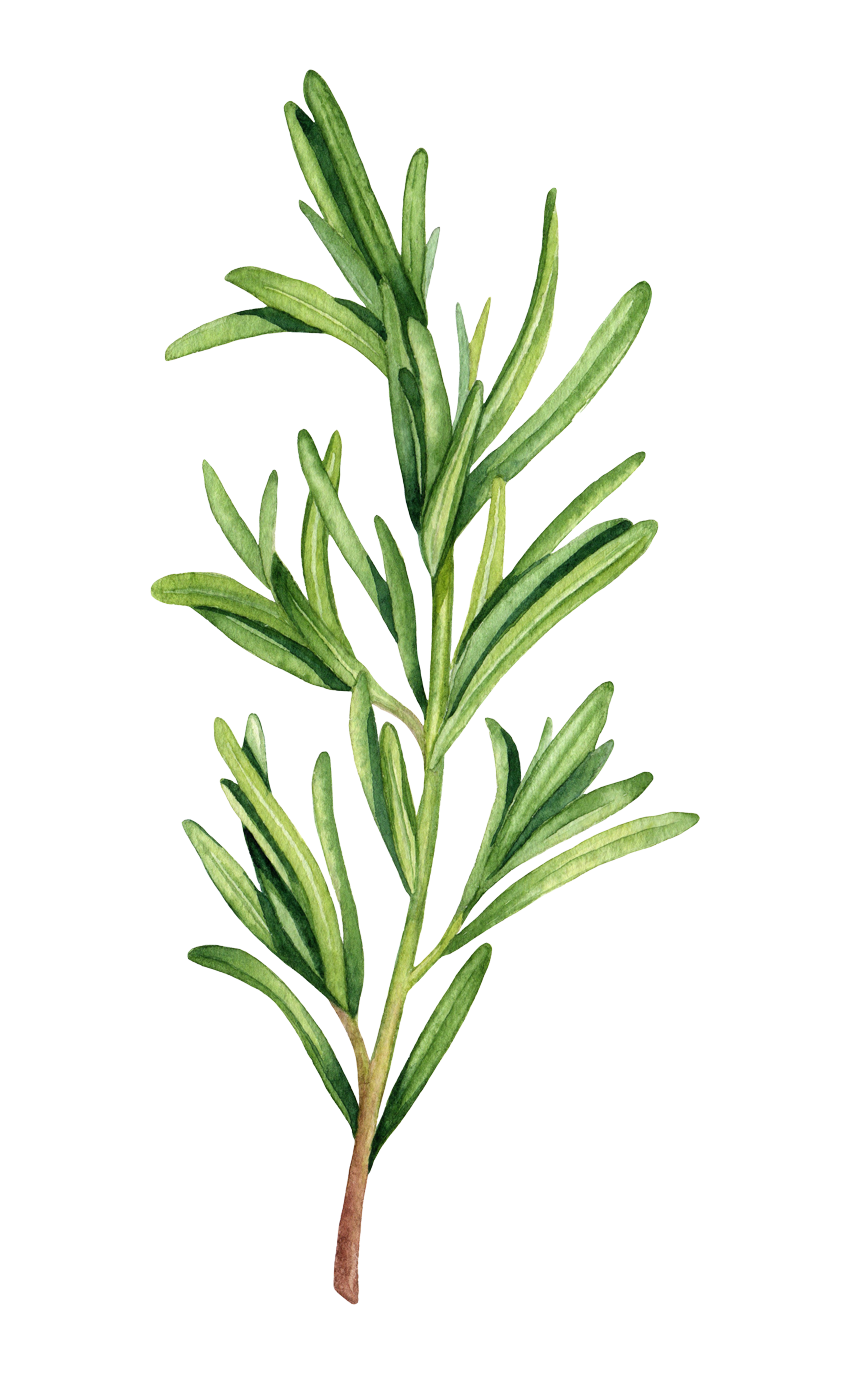
Rosemary botanical illustration

fig. 10 Salvia rosmarinus

Rosemary (Salvia rosmarinus, formerly Rosmarinus officinalis) is one of those plants that refuses to stay in its lane. Botanically a sage — a reclassification that happened in 2017, and that rosemary seems to have always known about itself — it grows in dense, aromatic thickets along Mediterranean coastlines, its needle-like leaves holding an oil so concentrated it scents the air before you've even touched the plant. That assertive, resinous presence is the whole point. Rosemary does not suggest itself. It announces.

The name unfolds from the Latin ros maris — "dew of the sea" — and if you've ever seen it growing wild on a clifftop above the Mediterranean, silver-blue flowers catching coastal light, the phrase lands with full weight. This is a plant shaped by salt wind and thin rocky soil, circumstances that would defeat less determined organisms. Instead, rosemary turns that austerity into complexity: the leaner the conditions, the more aromatic the leaf. There's a lesson in there somewhere.

As a smokable herb, rosemary brings a clean, resinous, slightly camphoraceous note that opens the breath and focuses the mind. It's not a background herb — it carries its lane clearly in any blend — and its long association with memory, clarity, and the threshold between the living and the dead makes it one of the more ceremonially loaded plants in any apothecary.

across time

Tradition & Ritual

Rosemary's ceremonial biography is long and remarkably consistent across cultures: again and again, across thousands of years, people reached for this plant at moments of transition. Ancient Greeks and Romans burned it at funerals and wove it into wedding wreaths — the same plant, the same ceremony, at both ends of the human story. The logic was not contradictory. Rosemary was understood as a keeper of memory and continuity, the fragrant thread connecting the living to the dead, the past to the future.

Greek students wore garlands of it while studying, believing it sharpened recall — a folk practice that modern neuroscience has since found some intriguing footing under (the aroma of 1,8-cineole, one of rosemary's primary volatile compounds, has been associated in research settings with cognitive performance). Medieval European households strewed it across floors and burned it to clear the air of illness and ill intent alike. It was planted at graves to honor the dead and thrown into coffins so the departed would not be forgotten.

In the folk traditions of Spain, Portugal, and southern France, rosemary was considered a protective plant — hung above doorways, tucked into cradles, and used to smudge homes. In some North African traditions it was burned as incense during prayer and ritual purification. Across all of these lineages, the common thread is the same: rosemary is a plant that clears, protects, and remembers. It was the herb you brought when you needed to be fully present for something that mattered.

what it offers

Scientific & Medicine

Rosemary's active chemistry is dominated by volatile terpenoids — chiefly 1,8-cineole (also called eucalyptol), camphor, and alpha-pinene — alongside rosmarinic acid, carnosic acid, and flavonoids. These compounds are responsible for both the herb's distinctive aroma and many of its traditionally recognized properties. Rosmarinic and carnosic acids in particular are potent antioxidants, and have been the subject of considerable research interest.

The cognitive angle is perhaps the most studied. A 2012 study published in Therapeutic Advances in Psychopharmacology found that exposure to rosemary aroma — diffused into a room — was associated with improved speed and accuracy on cognitive tests in healthy adults. The proposed mechanism involves 1,8-cineole crossing the blood-brain barrier and inhibiting acetylcholinesterase, which prolongs the activity of acetylcholine, a neurotransmitter associated with memory and learning. The Greek students with their study garlands were, it turns out, onto something.

Traditional uses include support for circulation, digestion, and respiratory comfort — the camphor content makes it naturally expectorant and the volatile oils are warming. As a smokable herb, rosemary contributes a clean, opening quality to blends. It is not a sedative or stimulant in any strong pharmacological sense; its effects are more tonal — clarifying, centering, present. No dosing or medical guidance is implied here; the science is offered as context, not instruction.

the old stories

Legends & Myths

One of the most persistent rosemary legends holds that the plant will only grow tall in a household where the woman is the true master — a piece of lore that circulated widely enough through medieval and early modern Europe that men were reportedly known to uproot suspiciously vigorous rosemary bushes from their gardens rather than face the social inference. The plant, as ever, had no comment.

In Christian legend, rosemary's flowers were said to have originally been white, and turned blue when the Virgin Mary draped her cloak over a rosemary bush to dry during the flight into Egypt. The plant has been called "Rose of Mary" in some traditions, though the etymological relationship to ros maris (dew of the sea) predates the Christian reframe by several centuries — an example of an older, sea-rooted identity being slowly overwritten by a newer story, while the plant itself remained indifferent to the revision.

In Elizabethan England, rosemary was such a thoroughgoing symbol of remembrance that it appeared at both weddings and funerals as a matter of course — brides carried it in their bouquets, mourners tossed sprigs into open graves. Shakespeare's Ophelia distributes it in Hamlet with the line "there's rosemary, that's for remembrance," and the line lands not as poetic invention but as simple cultural fact. The audience would have known exactly what she meant. Some plants accumulate so much symbolic weight over time that a single sprig can carry whole libraries of meaning — rosemary is one of those plants.

from the bear

Bear Originals

Rosemary brings its clarifying, resinous character to our Vizion Herbal Ceremonial Blend — our daytime blend built for focus, presence, and engaged awareness. It's a fitting home for a plant so long associated with the sharpening of mind and the practice of showing up fully to the moment at hand. The piney, slightly camphoraceous quality it contributes helps open the breath and set a clear, purposeful tone — which is very much what Vizion is designed to do.

We source our rosemary ethically, as we do across the catalog, with the understanding that an herb's quality is inseparable from the conditions of its growing. A plant this aromatic rewards clean sourcing visibly — the difference between well-grown, properly dried rosemary and its commodity counterpart is immediately apparent in the nose and in the smoke. You can also explore it on its own through our HERBALICIOUS smokable herb kit, which offers a range of single herbs for those who want to understand each plant's individual voice before hearing it in concert.

If you're curious about rosemary's place in the wider ceremonial conversation — how it pairs with other herbs, how to bring intentionality to a smoking ritual — the Bear Blend blog on ceremony and ritual is a good place to settle in. Rosemary has been part of ritual smoke for millennia. We're just keeping the thread alive.

Cautions & Contraindications

Rosemary is generally well-tolerated as an aromatic herb, and has a long history of use in food, medicine, and ceremony without significant safety concerns for most people. As with any smokable herb, individuals with asthma, reactive airways, or respiratory sensitivities should approach cautiously and consult a qualified health practitioner before use.

Rosemary is known to have mild emmenagogue properties — meaning it has traditionally been associated with stimulating uterine activity — and concentrated use is generally cautioned against during pregnancy. The amounts present in a ceremonial smoking blend are modest, but the caution is worth noting. People on anticoagulant medications or with seizure disorders should speak with their healthcare provider, as rosemary's active compounds may interact with certain medications in concentrated forms. As with all herbs, "natural" is not a synonym for "without consideration" — rosemary simply asks for the same respectful attention it has always been given.
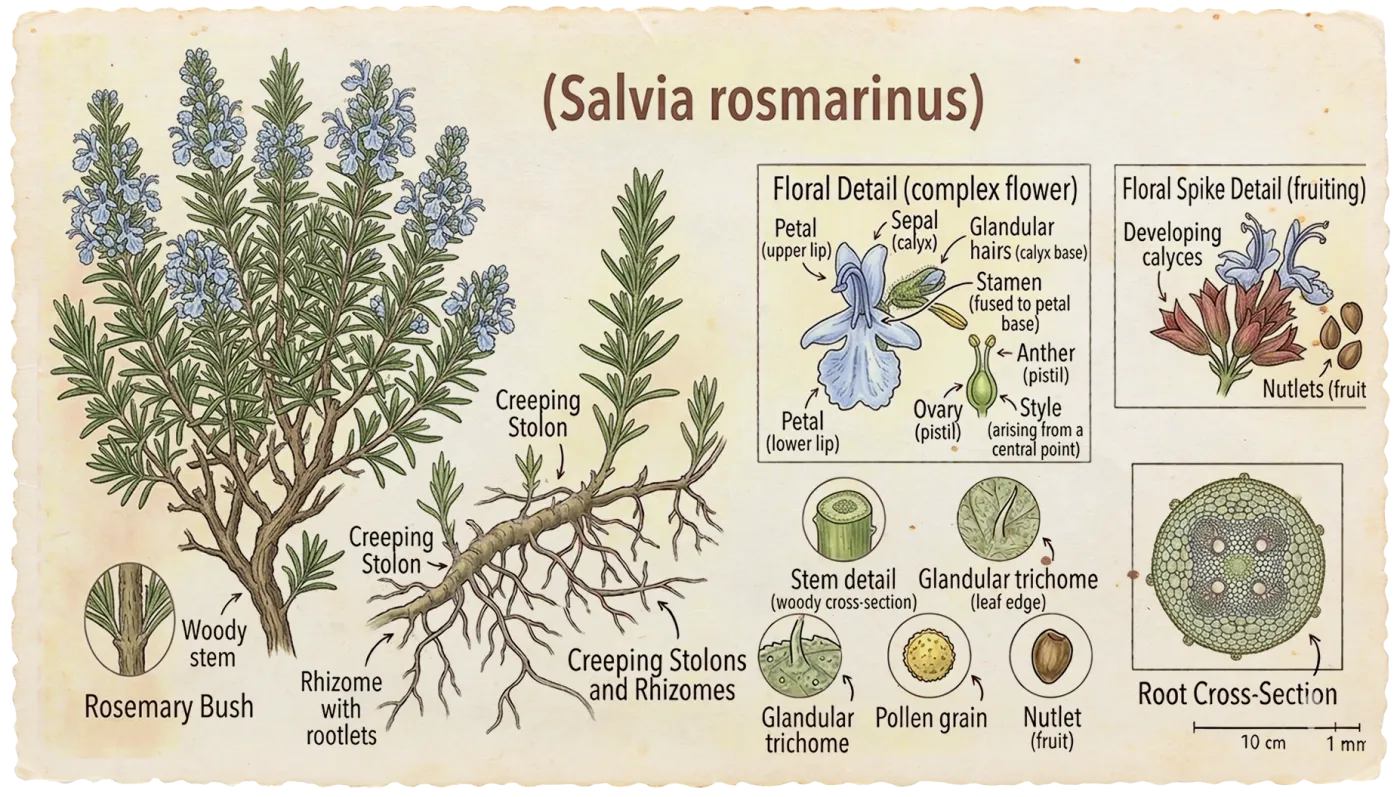
Botanical plate of Rosemary (Salvia rosmarinus)
of

of

cookies & such

We use essential cookies to run the shop (cart, checkout, sign-in) and, with your OK, analytics cookies to understand how folks use the site. See our Privacy Policy.