
Anthony Bear
July 9, 2026
The Messenger Has Arrived
There is a sound that can stop you mid-sentence, mid-thought, mid-whatever-small-worry-was-consuming-you — a sound so clean and sharp it seems to cut the air itself in two. It is the cry of the hawk. High, piercing, and startlingly loud for a creature riding thermals a quarter-mile above your head, it carries through valleys, bounces off canyon walls, and lands somewhere behind your sternum before your brain has even registered what it heard.
That is not an accident. That is the medicine.
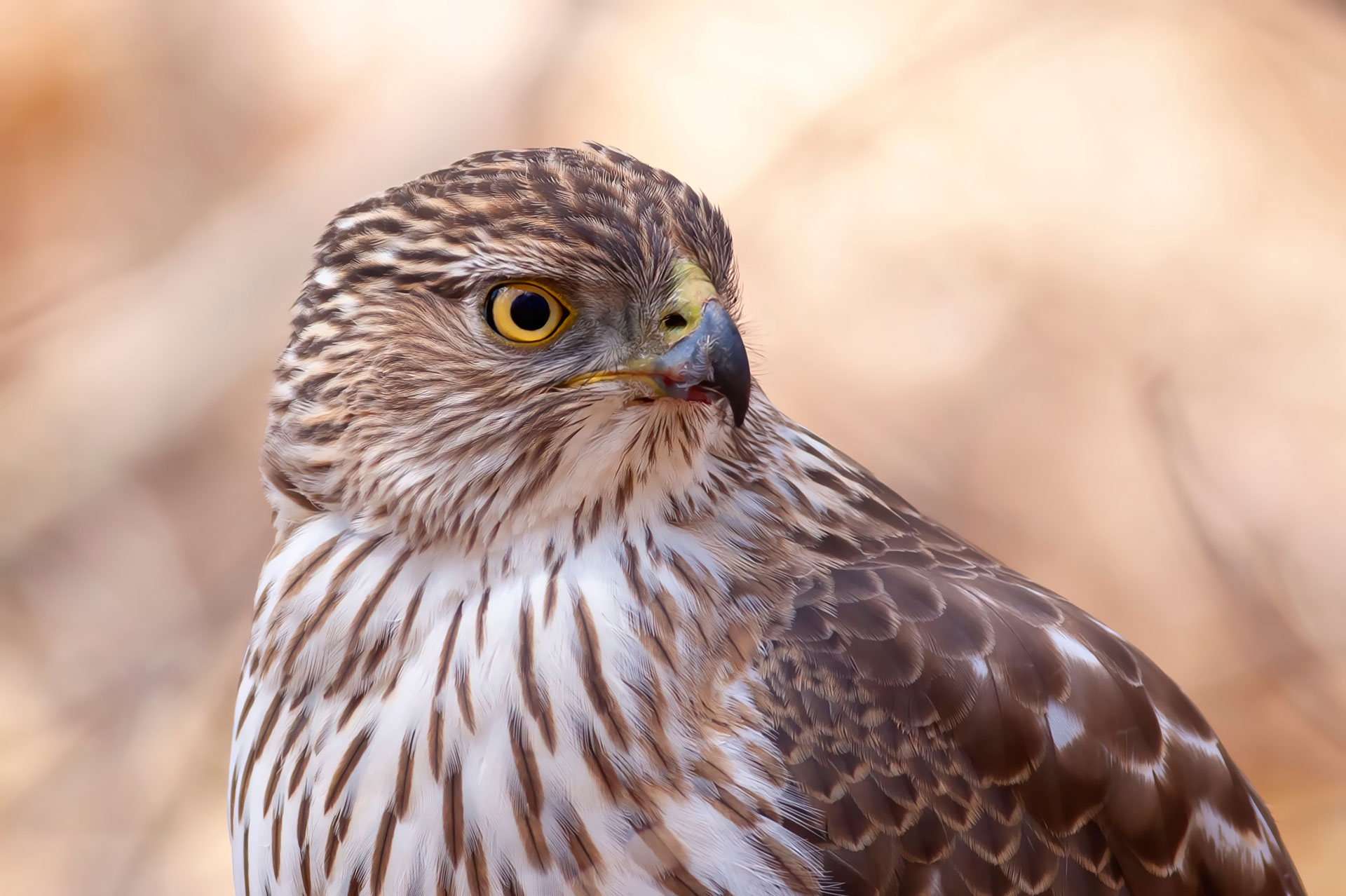
Across many of the world's indigenous traditions — from the Lakota and Ojibwe peoples of North America to the ancient Egyptians, who placed the hawk-headed Horus at the apex of their cosmology — the hawk has occupied a singular role: the great messenger, the divine courier, the winged being who moves between worlds and carries news between them. If you find yourself drawn to hawk energy, or if hawk keeps appearing in your life with suspicious regularity, the tradition says: the message is already here. You just haven't tuned in yet.
What Animal Totems Actually Do
It helps to understand what a totem or animal spirit is actually for before we go any further. These are not superstitions or decoration. They are a technology — a way of organizing awareness, of reading the living world around you as a kind of ongoing, breathing text. The natural world is always speaking. Animal totems offer a grammar for listening.
In this framework, each animal carries a particular medicine: a quality, a lesson, a reminder of something we tend to lose track of in the fog of daily life. When a specific animal appears repeatedly — in waking life, in dreams, in sudden and improbable encounters — it is understood as a message aimed at you specifically. The animal is not magical in the Hollywood sense. It is a mirror. It reflects something back at you that you need to see.
The hawk's medicine is the medicine of the messenger. And what a messenger it is.
The Cry That Carries for Miles
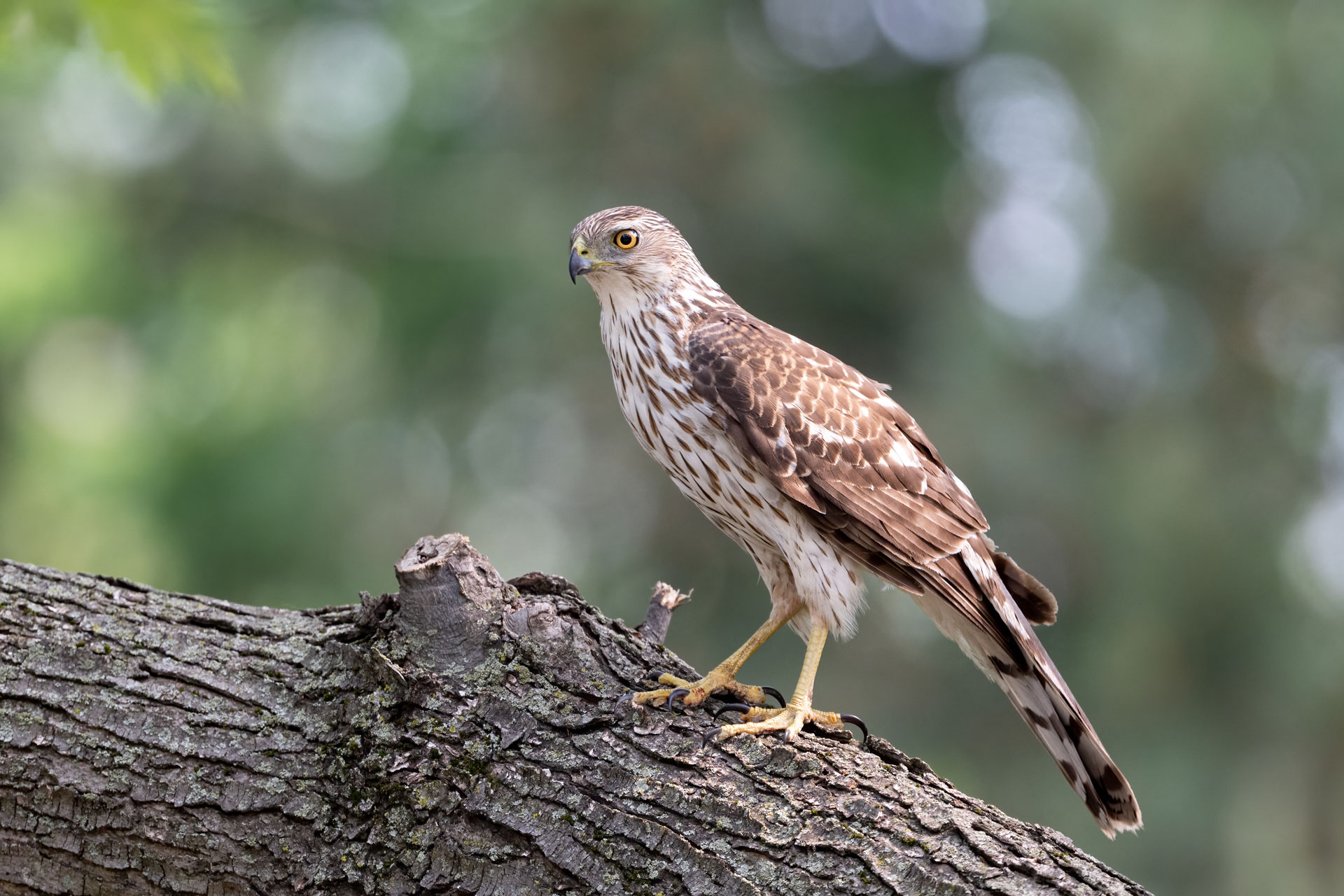
Here is the detail that stops most people: the cry of a Red-tailed Hawk — the hawk most commonly seen and heard across North America — is so piercing and resonant that it carries reliably for over a mile in open terrain. Ornithologists note that it is specifically designed to cut through ambient noise, to rise above the wind and the canopy and every other competing sound in the landscape. It arrives before the bird is even visible. You hear the hawk long before you see it.
And here is the practice that comes with that knowledge: the next time you hear a hawk call, pause. Don't look up immediately. First, notice what you were just thinking. What thread were you following in your mind in the exact moment before that cry arrived? Because the tradition holds that the hawk does not call randomly. It calls into something. Its voice is the exclamation point at the end of a sentence your deeper self was already composing.
That is a strange and beautiful idea. It is also, if you sit with it honestly, not that difficult to believe.
Hawk Qualities: A Field Guide to the Medicine
Hawk medicine is rich and layered. Here are the core qualities most traditions associate with this totem:
Heightened perception. Hawks see with a visual acuity roughly eight times sharper than a human's. Their medicine asks you to look more carefully — at situations, at people, at your own patterns. What are you seeing, and what are you refusing to see?
The messenger's role. Hawks carry communication between the earthly and the spiritual. When hawk appears, ask: what message am I being asked to deliver, or to receive?
Clarity through stillness. A hawk does not thrash around the sky. It soars, riding existing currents, conserving energy, watching. The medicine here is patience — the kind of stillness that allows you to see the whole field.
Timing and precision. When a hawk strikes, it is because the moment is exactly right. Hawk medicine asks whether you are acting from genuine readiness or from impatience and noise.
Awareness of omens and signs. Hawk is, above all, the animal that asks you to pay attention to the messages already present in your life — in conversations, in dreams, in coincidences that feel too precise to dismiss.
Hawk and Eagle: The Messengers Compared
Quality | Hawk Medicine | Eagle Medicine |
|---|---|---|
Primary role | Messenger, communicator | Vision, spiritual authority |
Scale of awareness | The immediate moment, the daily field | The vast horizon, the long arc |
Voice | Piercing, frequent, insistent | Rare, commanding, ceremonial |
The core question | What message are you missing right now? | What is the larger purpose of your life? |
The practice | Pause and listen whenever hawk cries | Seek elevation; climb to where you can see |
Both are powerful allies. But hawk works in the everyday. It is less concerned with your cosmic destiny than with whether you are paying attention this afternoon.
Working with Hawk Medicine in Ceremony
You do not need a hawk feather or a vision quest to begin working with this energy. What you need is the willingness to be interrupted — to let the natural world break through your mental weather and deliver something.
A simple practice: spend time outside with no agenda and no screen. Bring something ceremonial to the moment — a cup of herbal tea, a quiet smoke with one of our Kin Nik Nik ceremonial blends, the kind of ritual pause that signals to your nervous system that this moment is different from the noise. Then just be available. Watch the sky. Notice what moves. Notice what calls.
Many of our ceremonial traditions are built on exactly this premise: that the act of creating a ritual container — even a small one, even just a moment of intentional stillness — opens a channel that ordinary distraction keeps closed. The hawk cannot deliver its message to a mind that is already full.
If you feel drawn to the deeper practice of working with plant allies during ceremony and reflection, our herb encyclopedia is a good place to wander. Mugwort, long associated with prophetic dreaming and heightened awareness, has been used by many traditions specifically to open the inner ear — to make a person more receptive to exactly the kind of subtle messages that hawk medicine deals in.
The Cry Is Already in the Air
The hawk does not wait for you to be ready. It calls when it calls, and the message lands where it lands. The only question is whether you are present enough to catch it — or whether you are so deep in your own mental loop that the sharpest sound in the natural world passes through you like water through cupped hands.
That, in the end, is what hawk medicine teaches. Not some grand revelation, not a cosmic secret. Just this: the world is speaking constantly, in a hundred voices, through a hundred channels. The hawk is the one who cuts through all of it with a single, undeniable note — and asks you, simply, to stop. To listen. To wonder what message was already on its way to you before that cry split the sky.
The messenger has arrived. The question is always the same: are you home?

Written by
Anthony Bear is the founder of Bear Blend and the originator of the herbal smoking blend cultural movement. He learned about botanicals and herbs many years ago and has been on pursuit of this knowledge since then through his musical and entrepreneurial projects. He is also the host of a podcast called In the Chair with Bear.
Read more from Anthony Bear
Start the conversation
Leave a comment