Anthony Bear
July 2, 2026
The Holiday We Think We Know
Every July 4th, the ritual is familiar: flags, grills, fireworks arcing over neighborhoods still smelling of lighter fluid. We celebrate independence — the rugged, singular, every-person-for-themselves kind. The mythology of the self-made winner. The bootstrapper. The trillionaire in the making.
It's a powerful story. It's also only half a story, and the half we left out is the more interesting one.
This year, we'd like to propose a small amendment. Not to the Constitution — that paperwork is complicated enough — but to how we hold the day. What if July 4th became, even quietly, in your own ceremony and community, an Interdependence Day? A celebration not of isolated triumph but of the intricate, gorgeous web of mutual care that actually keeps life going?
Plants figured this out a few hundred million years ago. We're catching up.
The Dog-Eat-Dog Myth and What Nature Actually Does
American culture has a recurring dream: the lone genius, the solo entrepreneur, the winner who takes all. Competition is treated as nature's highest law — survival of the fittest, red in tooth and claw.
But spend any time genuinely studying the natural world and that story falls apart fast. Trees in a forest share resources through fungal networks, routing sugars to struggling neighbors. Bees build collective intelligence that no single bee possesses. Even the herbs you smoke — mullein, mugwort, damiana — evolved in relationship: with soil microbes, with pollinators, with the water table, with you. None of them made it alone.
The hyper-individualist model doesn't produce resilience. It produces fragility. Monocultures collapse; ecosystems endure. The question worth sitting with this July 4th is which model we actually want to be building.
The Document That Borrowed from the People It Would Dispossess
Here is the part of the Fourth of July story that doesn't make it into most fireworks programs.
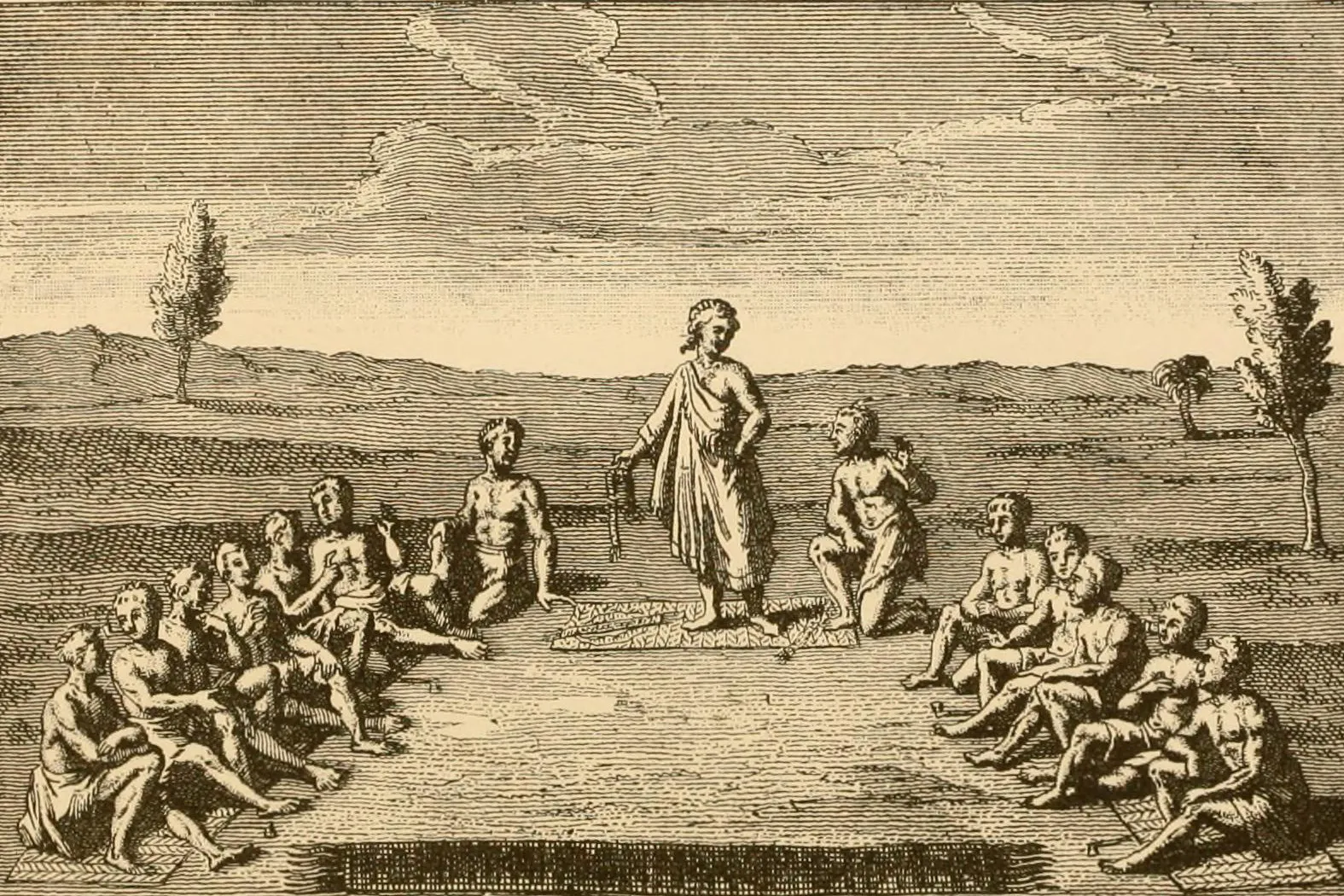
The Haudenosaunee Confederacy — also called the Iroquois Confederacy — is one of the oldest participatory democracies on Earth, with a constitution known as the Gayanashagowa, or Great Law of Peace, that scholars estimate was established somewhere between the 12th and 15th centuries. It confederated six nations — Mohawk, Onondaga, Cayuga, Oneida, Seneca, and later Tuscarora — under a framework that included a bicameral legislature, an executive council, mechanisms for impeachment, and protections for freedom of speech and religion.
When Benjamin Franklin hosted the Albany Congress in 1754, the Haudenosaunee were present and their system was explicitly discussed as a model. Franklin wrote admiringly of how the Iroquois had managed to confederate disparate nations under shared governance — something the fractious colonies had not yet achieved. The influence wasn't incidental. It was documented, debated, and drawn upon.
In Senate Concurrent Resolution 76, passed in 1988 — and a companion House resolution that followed — the United States Congress formally acknowledged the contribution of the Iroquois Confederacy to the U.S. Constitution and the democratic principles embedded in it. It's on the record. It just rarely makes the parade float.
What Got Left Out: The Circle of Grandmothers
Here's where it gets genuinely interesting — and where the Founders' plagiarism became, let's say, selective.
Within the Haudenosaunee system of governance, there existed a body called the Clan Mothers. These were senior women, often described as a council of grandmothers, who held remarkable institutional power. They nominated the male sachems (chiefs) who would lead, and — crucially — they could remove them. A leader who failed his responsibilities, who became corrupt, arrogant, or simply stopped listening, could be warned, warned again, and then deposed by the Clan Mothers. The executive served at the pleasure of the grandmothers.
The Founders absorbed the three-branch structure, the checks and balances, the concept of confederated representative governance. And then they quietly left the grandmothers out.
One could speculate about why. One could also look at the current state of global leadership and wonder, with complete sincerity, whether things might be running a little smoother if we still had a formal council of grandmothers vetting candidates before they got anywhere near the job. A body whose first question was not how much have you raised but are you actually wise enough for this.
It is, to put it plainly, a gap in the architecture.
Interdependence as the Original Design
The Haudenosaunee model wasn't built on the mythology of the individual winner. It was built on the understanding that a community is only as strong as the care circulating within it — between nations, between generations, between the living and those not yet born. The Great Law of Peace famously asked leaders to consider the effects of decisions on the seventh generation forward. That's not a metaphor. That was governance policy.
Compare that to a quarterly earnings call.
Interdependence is not weakness. It is, in fact, the most sophisticated technology a civilization can develop — the capacity to function as a system rather than a scramble. It is also, not coincidentally, how every thriving plant community operates. The intelligence of plants is distributed, relational, and slow. It does not optimize for the single tallest tree. It optimizes for the forest.
A Brief Comparison Worth Sitting With
Element | Haudenosaunee Great Law | U.S. Constitution (1787) |
|---|---|---|
Legislative body | Grand Council of sachems, two deliberating houses | Bicameral Congress |
Executive function | Appointed leaders, consensus-based | Elected President |
Removal of leaders | Clan Mothers could impeach and remove | Congressional impeachment process |
Generational responsibility | Seven-generation principle embedded in law | Not formally encoded |
Role of women | Central — Clan Mothers held veto power over leadership | Absent until the 19th Amendment, 1920 |
Environmental relationship | Land as relative, governance accountable to it | Land as property |
How to Celebrate Interdependence Day This July 4th
You don't have to blow up anything to make this meaningful. In fact, the opposite kind of ceremony might serve better — something slow, intentional, shared.
Smoke with someone you've been meaning to reconnect with. The peace pipe tradition of the Haudenosaunee and many other Indigenous nations wasn't a social nicety — it was a technology of council, of honest speech, of witness. Our Kin Nik Nik blend takes its name directly from that tradition.
Name your interdependencies out loud. Who grew your food? Who taught you something essential? Who shows up when things go sideways? Gratitude, spoken aloud in ceremony, is a form of governance — it maps the web that holds you.
Ask the seventh-generation question. About something in your own life. A decision you're sitting with. A habit. A relationship. What does it look like in seven generations? It is a genuinely clarifying question.
Find your grandmothers. Literally or figuratively. Who in your life holds the elder wisdom? Who would you trust to evaluate whether you are actually ready for the responsibility you're carrying?
The Revolution That's Still Waiting
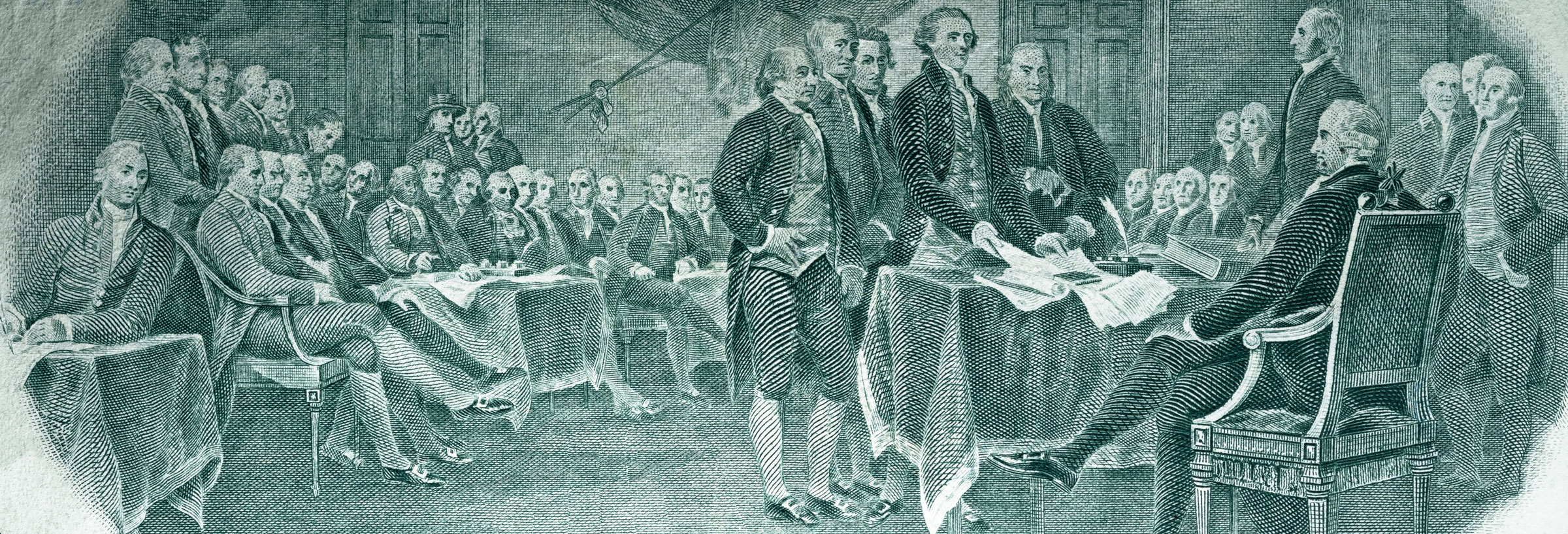
The Declaration of Independence was, at its best, an argument that no single authority should hold unchecked power over a people. That's a genuinely radical and beautiful idea. It just wasn't applied widely enough, and some of the best parts of the blueprint it borrowed from got quietly shelved.
The revolution that remains — the one worth lighting something for — is the one that moves us from independence to interdependence. From the fantasy of the self-sufficient winner to the reality of the ecosystem. From the extraction economy to the seventh-generation economy. From the quarterly report to the grandmother's question.
Plants have been running that system for a very long time. They're patient. They'll wait for us to catch up.
Happy Interdependence Day. May your ceremony be shared, your smoke be clean, and your council include at least one very wise elder.

Written by
Anthony Bear is the founder of Bear Blend and the originator of the herbal smoking blend cultural movement. He learned about botanicals and herbs many years ago and has been on pursuit of this knowledge since then through his musical and entrepreneurial projects. He is also the host of a podcast called In the Chair with Bear.
Read more from Anthony Bear
Start the conversation
Leave a comment