
Anthony Bear
September 18, 2025
A Flower at the Center of Ancient Egypt's Most Sacred Nights
Three thousand years ago the ancient Egyptians really knew how to party. Underground candlelit soirees, vessels of narcotic wine passed between kings and queens, beds of lotus petals — and woven through every painted scene, every carved relief, every erotic hieroglyph: a single flower. Not a decoration. A participant.
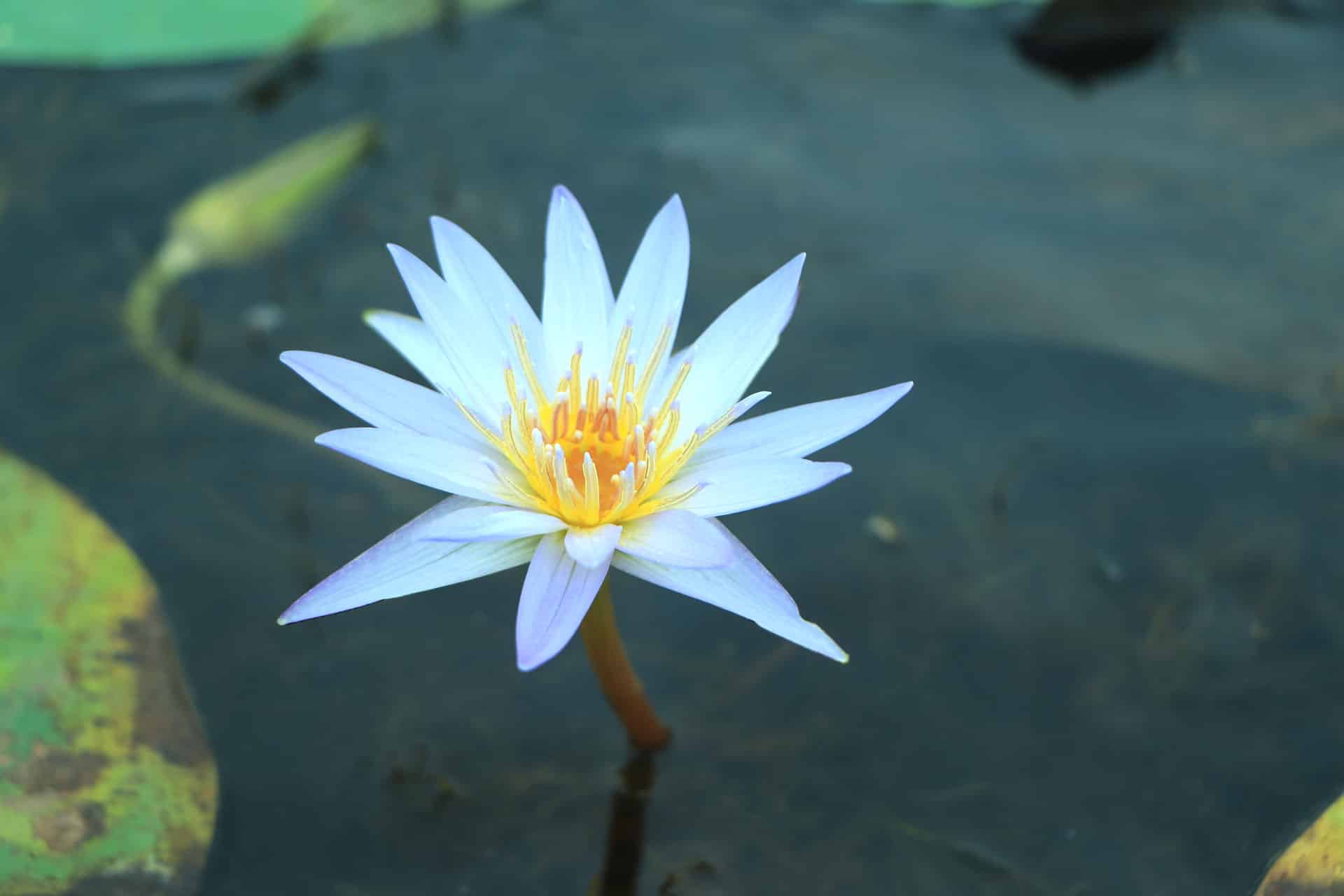
That flower was Nymphaea caerulea — the Egyptian Blue Lotus. And if you think you've already tried it, there's a good chance you haven't.
The Blue Water Lily Imposter
The ceremonial botanical market has lit up in recent years with blue lotus oils, vapes, cigarettes, and tinctures. The enthusiasm is warranted. The botany, unfortunately, is mostly wrong.
According to research by Liam McEvoy at UC Berkeley, the products sold online as blue lotus are frequently something else entirely — Nymphaea nouchali, a visually similar water lily that grows abundantly in Thailand, Bangladesh, and Sri Lanka, but lacks the nuciferine levels found in verified Nymphaea caerulea. McEvoy's analysis found that "the nuciferine levels were much higher in verified Egyptian blue lotus when compared to the Etsy-sourced flower," leading him to conclude that most flowers sold online are "a visually striking, but otherwise common, non-psychoactive water lily."
We'll be honest: we got swept up in it too. For a period we were unknowingly sourcing Nymphaea nouchali from farmers who were themselves mislabeling the product — whether out of ignorance, proximity to profit, or simple supply-chain blur. Nymphaea caerulea is genuinely rare. It is difficult to cultivate, slow to harvest, and hard to mass-produce. The market has been quietly papering over that scarcity with a look-alike.
We've set that straight. Thanks in part to a collective from Sri Lanka called Vedda, we found a source cultivating authentic Nymphaea caerulea in the old traditional way, honoring its history and heritage. We now carry the real Egyptian Blue Lotus in limited quantities — and we mean the verified kind, not the oregano-in-a-bag version.
What Ancient Egypt Actually Recorded
Of all the ceremonial plants with documented histories, few have left a paper trail quite like the Blue Lotus. It doesn't just appear in Egyptian art — it saturates it. Temple carvings, tomb frescoes, funerary steles, ritual vessels. Actual three-thousand-year-old botanical specimens were found mummified alongside royalty, including Asru, the singer and enchantress, whose tomb preserved intact flower specimens from over three millennia ago — giving modern botanists a rare window into the genuine plant.
Egyptologist Joann Fletcher, working with botanical archaeologists, ran detailed flavonoid profiles on Nymphaea caerulea and identified compounds potentially responsible for heightened sensory awareness, sexual vigor, and feelings of euphoria. Which tracks with the written record.
The Turin Erotic Papyrus, dated to approximately 1150 BC and housed in the Museo Egizio in Turin, is essentially the world's oldest illustrated erotic document — a series of vignettes depicting couples in various acrobatic positions at what can only be described as a very committed late-night gathering at Deir el-Medina. Blue lotus flowers appear repeatedly throughout, balanced on women's heads or held in hand, woven into scenes of ecstatic ritual. An ancient pyramid-shaped seat makes an appearance. The flower was clearly not incidental.
Separate tomb imagery and wine vessel archaeology also suggests the Egyptians soaked Blue Lotus flowers directly in wine — a practice that would have made the active compounds significantly more bioavailable. The god Nefertem, often depicted rising from a Blue Lotus at the dawn of creation, represented both beauty and healing. This wasn't a party favor. It was a cosmological symbol.
a closer look
of
The Compounds Behind the Ceremony
So what does authentic Nymphaea caerulea actually contain? Here's where the science catches up to the mythology:
Compound | What It Is | Historical Relevance |
|---|---|---|
Nuciferine | Psychoactive alkaloid with dopamine-modulating properties | Found at significantly higher levels in verified N. caerulea than in common water lily imposters |
Apomorphine | Dopamine agonist; used clinically today for erectile dysfunction | Likely contributor to the flower's reputation for sexual enhancement in Egyptian ritual |
Flavonoids | Plant polyphenols with antioxidant and potentially psychoactive activity | Identified in Joann Fletcher's botanical analysis of archaeological specimens |
Documented case studies on larger doses of genuine Egyptian Blue Lotus have noted effects including prolonged euphoria and, in some cases, hallucinatory experiences. The compound profile reads — and we say this with genuine reverence, not marketing — a little like what might happen if ecstasy and an ancient remedy for impotence had a ceremonial child together. That's not a pitch. That's a reasonable reading of the chemistry.
Which is precisely why it deserves the same careful respect given to any powerful plant ally.
How to Approach a Plant This Old
Blue Lotus belongs in the same conversation as ayahuasca, psilocybin, ibogaine, peyote, and the opium poppy — plants that cultures across time have treated not as substances but as teachers. Sacred, ceremonially bounded, approached with intention.
Start with smaller amounts and give yourself time to understand how your own chemistry responds.
Set your space before you begin — ceremony isn't decoration, it's the container that makes the experience coherent.
Consider pairing with a grounding herb like mullein to smooth the smoke.
If you are taking any medications, consult a qualified practitioner before working with this flower. The apomorphine content is not trivial.
Honor it. A flower that was buried with pharaohs and painted on temple walls for three thousand years has earned at least a moment of acknowledgment before you light up.
The Real Thing, Finally
The craze around Blue Lotus isn't misplaced — it's just been misdirected toward a common water lily that happens to look the part. The genuine Nymphaea caerulea is rare, traceably sourced, and carries a history that most plants can only dream of. If you're drawn to explore it, we carry authentic Egyptian Blue Lotus in limited supply — grown the old way, by people who understand what it is.
Approach it the way the Egyptians did: with candlelight, with intention, and with a quiet nod to the fact that this particular flower has been in the room at humanity's most sacred and wild gatherings for longer than most civilizations have existed. It doesn't need hype. It just needs respect.

Written by
Anthony Bear is the founder of Bear Blend and the originator of the herbal smoking blend cultural movement. He learned about botanicals and herbs many years ago and has been on pursuit of this knowledge since then through his musical and entrepreneurial projects. He is also the host of a podcast called In the Chair with Bear.
Read more from Anthony Bear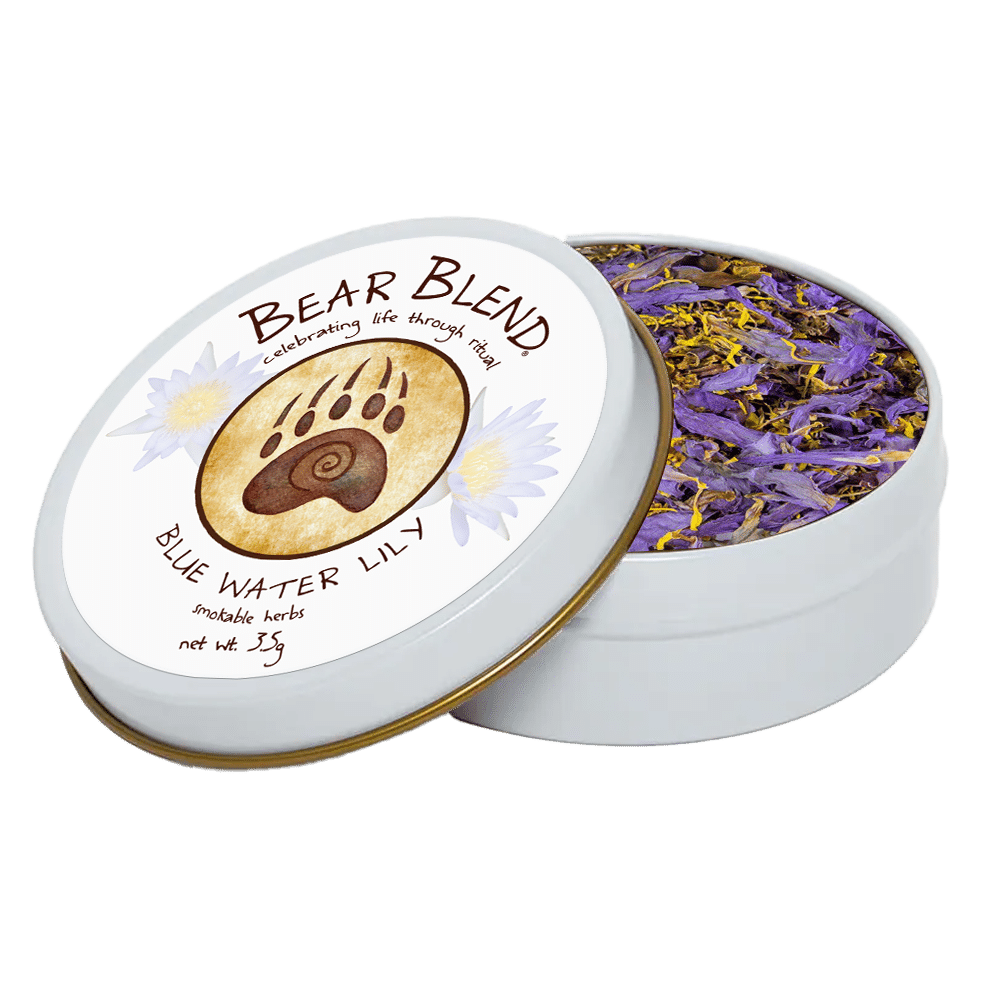
Start the conversation
Leave a comment