The Oldest Force in the Room
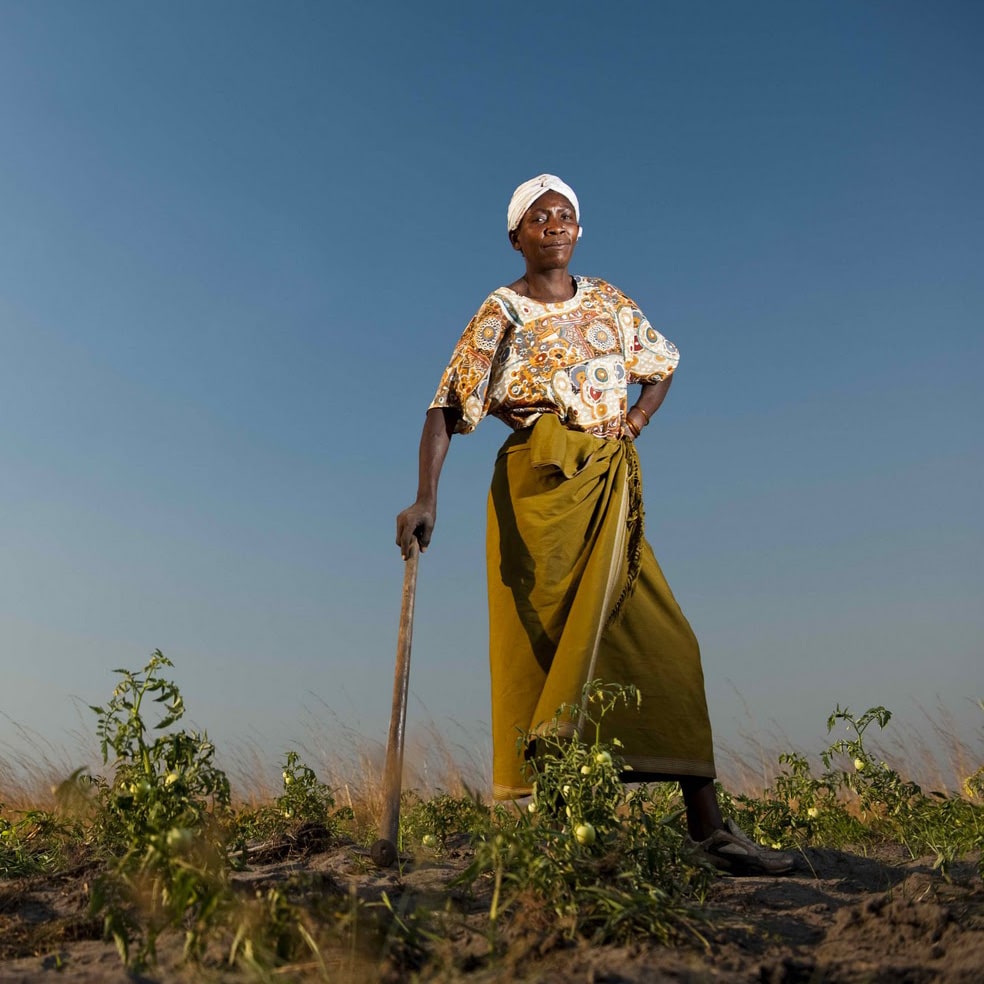
Before governments, before written language, before anyone thought to build a wall, there were women tending fires and plants tending soil. Not as a poetic metaphor — as literal, documented fact. The oldest known pharmacopeias, traced to ancient Sumer and Egypt, were largely the domain of female healers. The herbs they worked with had been cultivated, catalogued, and passed mouth-to-ear through generations of women who understood that plants were not resources to be extracted but relationships to be maintained.
That thread is unbroken. It just went quiet for a while.
What Endurance Actually Looks Like
Here is a far-out true thing: in nearly every ultramarathon study that has looked at performance over extreme distances — we are talking 100 miles and beyond — women's finishing rates relative to men's improve dramatically as the distance increases. At standard marathon length, the gap is measurable. At 100 miles, it narrows to near parity. At multi-day events, women frequently outperform. The working hypothesis among researchers is that women's physiology is optimized not for explosive, short-term output, but for sustained, adaptive endurance — the ability to keep going when the easy fuel runs out.
Plants understood this design long before sports science did. The plant kingdom's own endurance champions are overwhelmingly quiet, slow, and persistent. The Pando aspen grove in Utah — a single clonal organism estimated at 80,000 years old — does not sprint. It spreads. It waits. It holds.
Nurturing Is Not Softness — It Is Strategy
The nurturing impulse is one of the most strategically sophisticated behaviors in the natural world. Consider what it actually requires: sustained attention, the ability to read subtle signals of need, the willingness to give resources before receiving them, and the long-game thinking that prioritizes a thriving system over a personal short-term win. These are not small things. In ecological terms, they describe the behavior of what biologists call a keystone species — the organism whose presence holds an entire ecosystem in balance.
Women have functioned as keystone species in human communities since the beginning. And the herbs that have kept company with them across centuries tend to share the same character: quietly powerful, deeply rooted, easy to overlook until you need them most.
A Few of the Plant Allies Who Know This Well
Herb | Traditional Association | Quality It Embodies |
|---|
Mugwort | Women's wisdom, dreaming, lunar cycles | Intuition, inner vision, the courage to look inward |
Red Raspberry Leaf | Reproductive health, generational care | Nourishment at the cellular level, long preparation |
Rose Petals | Love as a healing force across nearly every culture | Beauty that is also armor; softness with thorns |
Damiana | Sacred to the Maya, connected to feminine vitality | Warmth, desire, the joy of being in a body |
Motherwort | Heart medicine, protection, nervous system support | The fierce calm of someone who has already survived |
The Underground Network
If you want a structural metaphor for how women have held things together through history, look at mycorrhizal networks — the fungal threads that connect plant root systems underground, allowing trees to share nutrients, water, and even chemical distress signals across vast distances. Older trees, sometimes called mother trees by forest ecologists like Suzanne Simard, have been shown to preferentially channel resources toward younger, struggling trees — including their own offspring. The forest is not a competition. It is a cooperative, and the elders are feeding the future.
This is not a stretch. It is what women have always done: moved resources — food, knowledge, safety, story — toward the ones who need it, often without anyone recording that it happened.
Ceremony as the Technology of Memory
Across Indigenous traditions worldwide, the tending of sacred plants and the keeping of ceremony have been women's work — not by assignment but by nature. When European colonization disrupted those traditions, it was frequently women who kept the seeds, who remembered the songs, who passed the plant knowledge through kitchens and gardens and whispered instructions when louder forms of transmission were forbidden.
Ritual is how cultures survive. Ceremony is how knowledge outlasts the people who hold it. And smoke — offered to the sky, shared in circle, breathed slowly with intention — has been a vehicle for that transmission since humans first gathered around fire. Our blog on smoking as prayer goes deeper into that lineage if you want to sit with it a while.
A Ritual to Hold the Thread
If you want to honor this — the endurance, the nurturing, the quiet revolutionary force of women and the plants who share their character — here is one simple way to do it:
Choose an herb that speaks to you from the table above. Hold it before you light it. Feel its weight.
Speak the name of a woman who held something together for you — a mother, a grandmother, a friend, a stranger who once said exactly the right thing. You do not need to say it aloud.
Light the herb. Let the smoke carry the acknowledgment upward. The sky has always been a good listener.
Breathe slowly. Notice what the plant offers — its particular character, its taste, the quality of the exhale. These are not accidents. These herbs were selected by centuries of careful attention.
Stay in it a few minutes longer than feels comfortable. That is where the real endurance lives.
The Strongest Thing in the Room Is Usually Quiet
There is a reason the oldest trees are not the tallest ones. The oldest ones are wide, deeply rooted, and connected to everything around them. They have weathered storms that killed younger, flashier neighbors. They are still here because they knew how to bend without breaking, how to give without depleting, and how to hold an entire forest's memory in their root system without making a single announcement about it.
Women are that. Plants know it. And somewhere in the act of slowing down, rolling something fragrant between your fingers, and breathing with intention, you get to remember it too. Explore the herbs that have kept this company for centuries at our herb encyclopedia, or step into a blend built on exactly this kind of quiet, enduring wisdom at the shop.


Start the conversation
Leave a comment