Bear Blend — Celebrating Life Through Ritual
Bear Blend
Sign In Create Account Cart

Gotu Kola

(Centella asiatica)

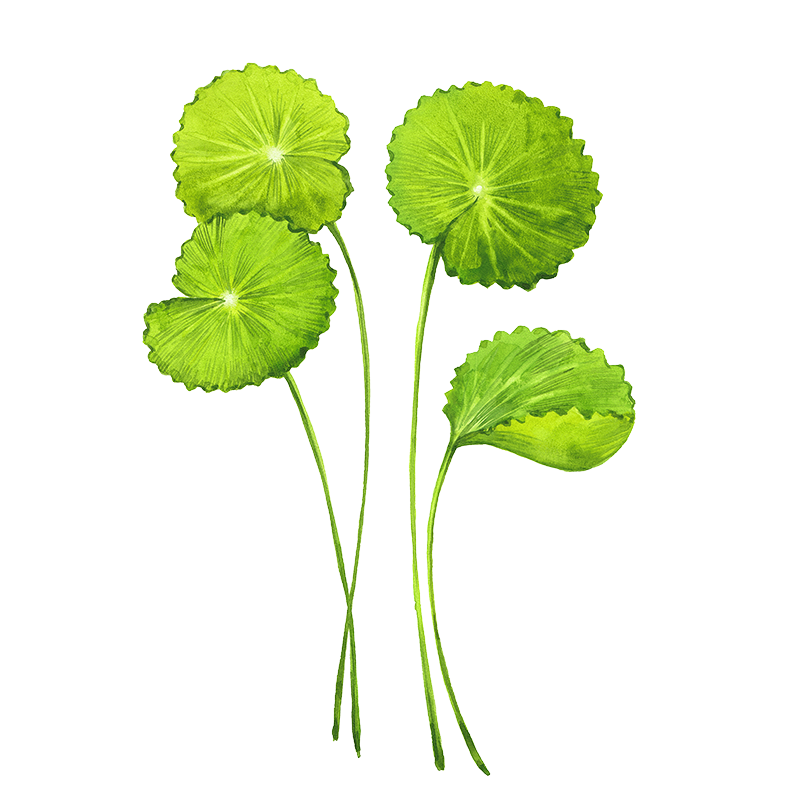
Gotu Kola botanical illustration

fig. 17 Centella asiatica

Gotu kola (Centella asiatica) is a small, unassuming creeper — low to the ground, fan-shaped leaves, a slight preference for damp soil near rivers and rice paddies — and it has been quietly holding court as one of the most revered herbs on the planet for roughly three thousand years. It belongs to no single tradition; Ayurvedic practitioners, Traditional Chinese Medicine doctors, and Indonesian and West African healers all arrived at it independently, which is the plant kingdom's way of insisting that something matters.

Its common name is sometimes confused with the kola nut, but the two are entirely unrelated. Gotu kola contains no caffeine, no stimulants, no dramatic alkaloids. Its power is more like the quality of a very old, very patient teacher — a clarifying stillness rather than a jolt. In parts of Asia it is simply called the herb of longevity, and the claim is made with a straight face.

The leaves are mild and slightly bitter, faintly green in the way of fresh spring water. In Sri Lanka and parts of Southeast Asia, they appear in everyday salads and fresh-pressed juices — a reminder that the line between food and medicine is a relatively modern invention, and a fairly arbitrary one at that.

across time

Tradition & Ritual

In Ayurvedic tradition, gotu kola holds the status of a medhya rasayana — a class of herbs understood to rejuvenate the mind, sharpen memory, and support spiritual development. It was historically prescribed to students of the Vedas who needed to memorize vast bodies of sacred text, and to yogis seeking to deepen their meditative practice. The logic was not purely intellectual: the herb was seen as a bridge between the busy surface mind and the quieter intelligence beneath it.

In Chinese herbalism, it has been used for centuries under the name ji xue cao (literally, leopard's foot grass) and appears in classical formulas addressing both mental clarity and physical vitality. The Taoist tradition has long associated it with the cultivation of jing, the foundational life essence — a category of energy that doesn't get depleted by simply working harder, but rather deepens through rest, ceremony, and reverent practice.

Across Bali and Java, gotu kola is used in ritual preparations before prayer and ceremony, valued for the quality of presence it encourages. If ceremony is a technology for arriving more fully in the moment, gotu kola has served as one of its more reliable instruments — not by overwhelming the senses, but by clearing the static that usually clutters them.

what it offers

Scientific & Medicine

Modern phytochemistry has identified a class of compounds unique to gotu kola called triterpenoid saponins — particularly asiaticoside, madecassoside, asiatic acid, and madecassic acid. These compounds have been the focus of a significant body of research, much of it centered on connective tissue regeneration, wound healing, and the integrity of the skin's collagen matrix. Pharmaceutical and cosmetic industries have taken note; derivatives of gotu kola extracts appear in a wide range of topical preparations.

On the cognitive side, research has explored gotu kola's relationship to nerve growth factor (NGF) — proteins that support the maintenance and regeneration of neurons. Several small human studies and a larger body of animal research have investigated its effects on memory, attention, and anxiety, with results that are promising enough to keep the scientific community genuinely interested. A review published in the journal Evidence-Based Complementary and Alternative Medicine noted its potential neuroprotective properties, though researchers are careful to point out that larger, more rigorous clinical trials are still needed.

Traditional medicinal uses have included support for circulation, venous insufficiency, and skin conditions. It has also been used as an adaptogen — an herb that helps the body and mind navigate stress more gracefully over time — though it doesn't fit neatly into that category by every definition. What seems consistent across traditions and emerging science alike is a picture of an herb that works slowly, subtly, and cumulatively. It is not an event; it is a practice. No dosing or treatment guidance is offered here — consult a qualified herbalist or healthcare provider for that conversation.

the old stories

Legends & Myths

Perhaps the most famous piece of gotu kola lore is attached to the Chinese herbalist Li Ching-Yuen, who is said to have lived to the extraordinary age of 256 years — a figure that history neither fully confirms nor entirely dismisses, but which the legend insists was sustained in part by a daily diet of gotu kola. Whether or not the math holds up, the story encodes something real about how Asian herbal traditions have understood this plant: not as a cure for any particular ailment, but as a companion for the long arc of a life well-tended.

In Sri Lankan folk tradition, the observation that elephants — renowned for their memory and longevity — regularly browse on gotu kola in the wild was taken as confirmation of the plant's powers. It is the kind of empirical reasoning that preceded the laboratory by several millennia and arrived at conclusions the laboratory is still catching up to.

Hindu mythology associates gotu kola with the goddess of learning and wisdom, and some classical texts reference it as an herb capable of opening the Ajna chakra — the third eye, the seat of intuition and inner vision. Whether one takes that cosmologically or metaphorically, the consistent thread across cultures is the same: this is a plant that helps you see more clearly, inside and out.

from the bear

Bear Originals

Gotu kola fits naturally into the Bear Blend philosophy — an herb that doesn't perform or announce itself, but instead deepens the quality of attention you bring to whatever you're doing. That quality maps directly onto the ceremonial context we frame our herbs within: the idea that slowing down and arriving fully in the present moment is not a passive act but an active and revolutionary one.

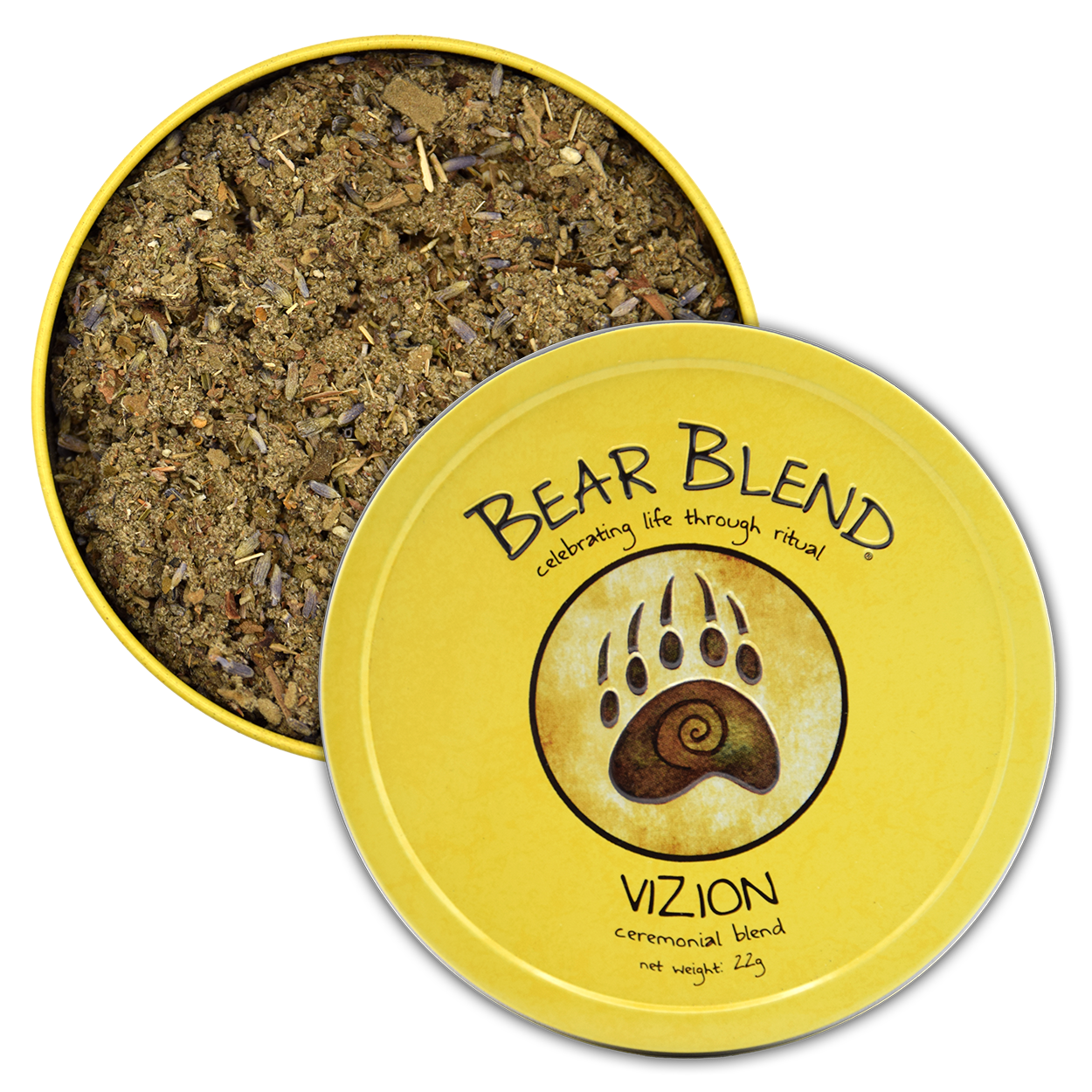
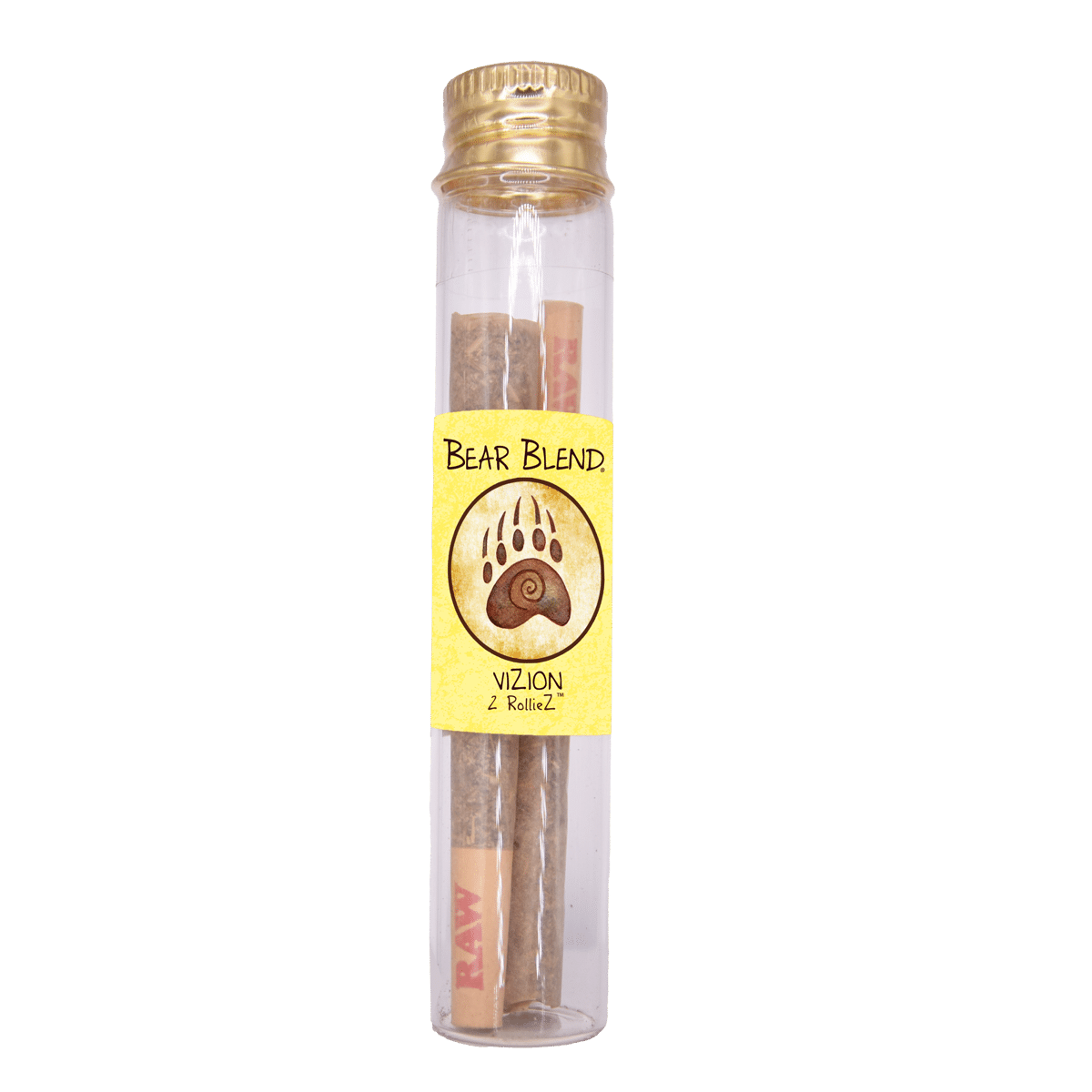
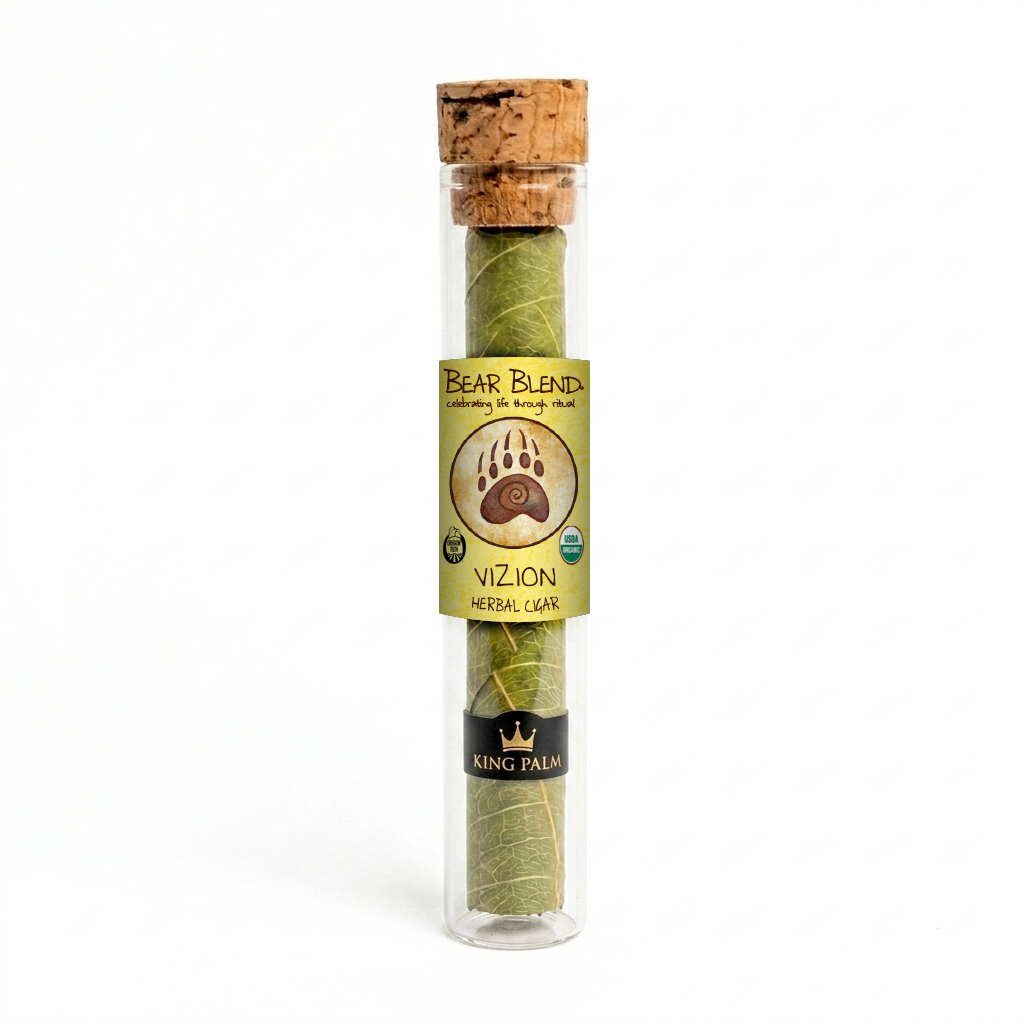
We carry gotu kola as part of our smokable herb catalog, sourced with the same commitment to certified-organic, ethically traceable supply chains that runs through everything we do. In smoke, it offers a mild, smooth character that blends well — a quiet voice in a chorus rather than a soloist. For those building their own ceremonial blends or exploring single herbs, it rewards a patient, attentive approach. You can read more about how people work with loose herbs in our FAQ on smoking loose herbs.

If you're curious about where gotu kola sits alongside other herbs in the tradition of plant-based ceremony and mental clarity, our plant journey blog post is a good place to wander next.

Cautions & Contraindications

Gotu kola is generally considered safe for most adults when used in reasonable amounts over moderate periods of time. That said, a few well-documented cautions are worth holding in mind. There are reports of rare but real cases of hepatotoxicity (liver stress) associated with high-dose or prolonged use of concentrated gotu kola extracts — primarily in supplement form rather than in culinary or tea quantities, but worth noting regardless. Anyone with pre-existing liver conditions should approach it thoughtfully and consult a healthcare provider.

Gotu kola may have mild sedative effects and could theoretically interact with medications that affect the central nervous system, including certain anti-anxiety drugs. It is also not recommended during pregnancy, as some traditional sources and preliminary research suggest it may have uterine-stimulating properties. Those with known allergies to plants in the Apiaceae (carrot) family should exercise caution, as cross-reactivity is possible.

As with all herbs, this is a starting point for your own research — not a substitute for the guidance of a qualified herbalist or medical professional who knows your particular situation.
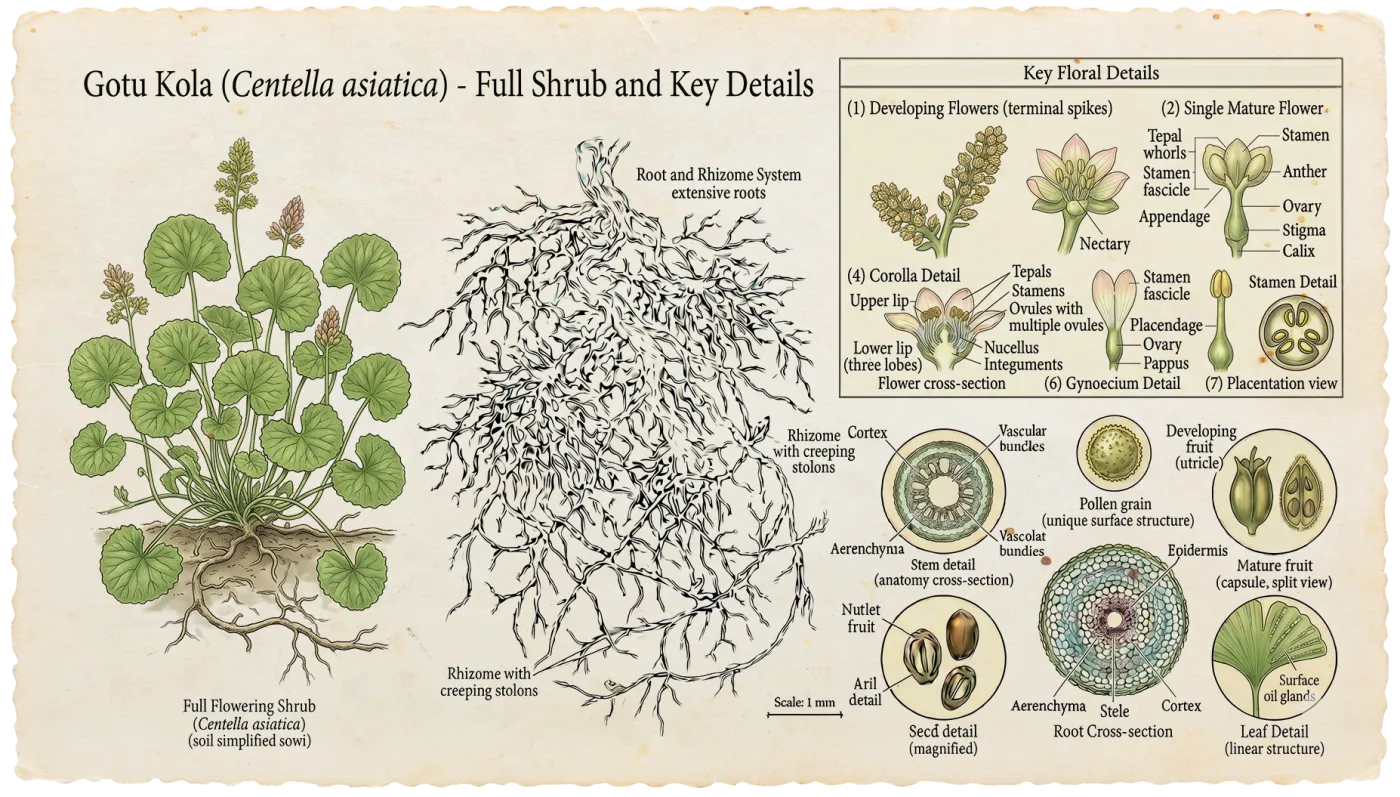
Botanical plate of Gotu Kola (Centella asiatica)
of

of

cookies & such

We use essential cookies to run the shop (cart, checkout, sign-in) and, with your OK, analytics cookies to understand how folks use the site. See our Privacy Policy.