Bear Blend — Celebrating Life Through Ritual
Bear Blend
Sign In Create Account Cart

Yerba Maté

(Ilex paraguariensis)

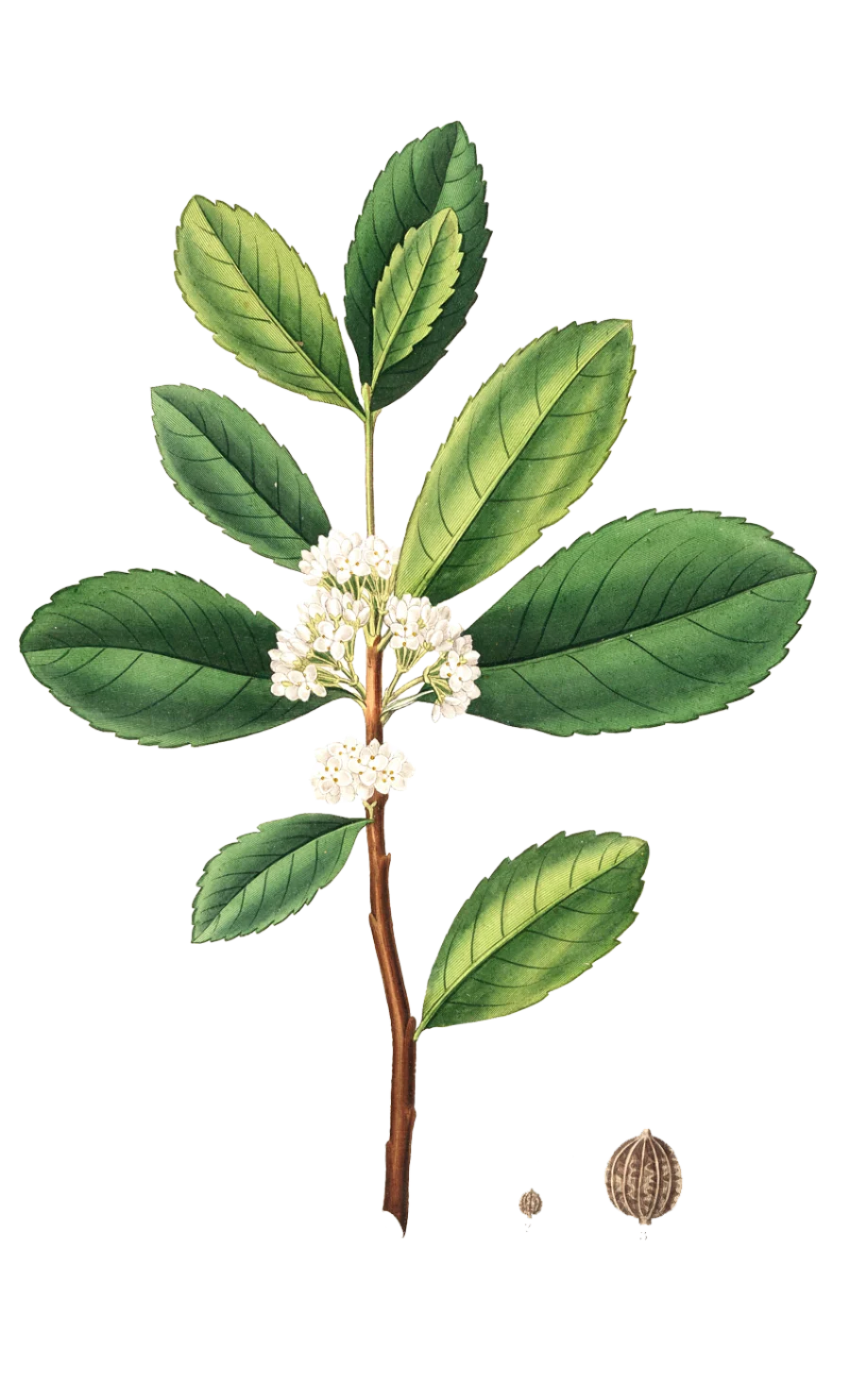
Yerba Maté botanical illustration

fig. 33 Ilex paraguariensis

There is a plant growing in the subtropical forests of South America that has been keeping humans awake, alert, and in good conversation for longer than any coffee shop has existed. Yerba maté (Ilex paraguariensis) is a holly — not a tea, not a coffee, though it shares chemical kinship with both — a broadleaf shrub that thrives in the shade of the Atlantic Forest canopy in what is now Argentina, Paraguay, Uruguay, and southern Brazil. Its leaves, once dried and prepared, yield a brew that is simultaneously earthy, grassy, and faintly bitter, with a depth that rewards patience.

What sets maté apart from the other caffeinated botanicals is something that's hard to put a name to but easy to feel: a clarity without the jagged edge. Devotees describe a focused warmth rather than a jolt — sustained attention that doesn't taper into a crash. Whether that quality is chemistry, ceremony, or both is a genuinely open question. The plant has been doing this for centuries without needing to explain itself.

Here's the factoid that tends to stop people mid-sip: a single yerba maté plant can live for over a hundred years, and wild specimens in the Atlantic Forest understory may have been quietly photosynthesizing since before European contact with the Americas. You are, in a very literal sense, drinking from something ancient. The yerba maté herb page on our site has more on what we carry.

across time

Tradition & Ritual

The Guaraní people of the Río de la Plata basin were the first known cultivators and ceremonial stewards of maté, and their relationship with the plant runs so deep that it shaped the language around it: the word maté derives from the Quechua mati, meaning gourd — the vessel, inseparable from the drink. For the Guaraní, maté was not simply a beverage; it was a gift from the forest spirits, a medicine of sociality, shared in circles where the gourd passed from hand to hand as an act of trust and community. To refuse the gourd was to refuse the circle.

Spanish Jesuit missionaries who arrived in the 17th century initially condemned maté as a vice — and then, fairly quickly, adopted it wholesale. The Jesuits eventually established the first large-scale maté plantations, recognizing both its economic value and the impossibility of convincing anyone to stop drinking it. This pragmatic capitulation is, in its own way, a testament to the plant's persuasive power.

The ceremony of cebado — the sharing of maté — remains culturally alive across Argentina, Uruguay, and Paraguay today, one of the most quietly enduring plant rituals on Earth. A designated cebador prepares and refills the gourd, passing it to each person in turn. The ritual encodes reciprocity, patience, and presence. It is, in the language we use here, ceremony as technology: a structured practice that reliably produces connection. The bombilla — the metal straw-filter through which the drink is sipped — is itself a kind of tool for slow attention, a brake against rushing.

what it offers

Scientific & Medicine

Yerba maté contains three primary xanthine alkaloids: caffeine, theobromine, and theophylline — the same trio found, in varying ratios, in coffee, cacao, and tea respectively. Maté has them all at once, which may partly explain the distinctive quality of its stimulation. It also contains a notable array of polyphenols, including chlorogenic acids and flavonoids, along with saponins and a range of vitamins and minerals. Researchers have characterized it as one of the more nutritionally complex plant infusions documented.

Studies — including work published in journals covering nutrition, food science, and cardiovascular health — have examined maté in relation to antioxidant activity, lipid metabolism, and glycemic response, with results that have been consistently interesting without yet being conclusive. This is the honest state of the science: promising, ongoing, and appropriately humble. The plant has been used in traditional South American herbalism as a general tonic, a digestive aid, and a support for physical endurance; indigenous and folk traditions often attributed to it properties of mental clarity and resilience under fatigue.

It bears noting that maté is consumed as a tea — an infusion — and that is the primary traditional and modern context for its use. As with any botanical, the mode of preparation, the source material, and the individual matter. We offer no medical advice here; what we offer is curiosity and context. If you're exploring maté as part of a broader herbal practice, the Smoke Signals piece on pairing herbs with your morning ritual is worth a read.

the old stories

Legends & Myths

The Guaraní origin story of maté centers on a goddess — or, in some tellings, a pair of forest spirits — who descended to Earth and were protected from a jaguar attack by an old man and his daughter. In gratitude, the deity gave the family the first maté plant, promising that as long as they shared its brew with others, it would sustain them. The story encodes the plant's central ethic: maté is not meant to be drunk alone. Hoarding it violates the original gift. The circle is the point.

There is also a persistent legend that the Guaraní shamans could read the future in the leaves of the maté plant — not in the brewed residue, like tea-leaf reading, but in the living plant itself, watching the direction of new growth, the color of the youngest leaves, the way the canopy light fell through the understory. Whether or not this practice was literal, it points to something worth sitting with: the idea that a plant with a century of life behind it might have something to say about what comes next.

In Uruguayan folk tradition, maté has long been associated with friendship so deep it borders on kinship. There is a saying — loosely rendered — that you do not truly know a person until you have shared a gourd with them in silence. The silence is important. Not awkward silence, but the kind that the ceremony creates deliberately: a pause in which the plant, the vessel, and the moment are allowed to do their work without narration.

from the bear

Bear Originals

Yerba maté finds its place in our world as a botanical that exemplifies exactly what we're drawn to: a plant with deep ceremonial roots, genuine cultural longevity, and a character complex enough to reward attention. We source with the same commitment to organic, traceable origins that guides everything in our catalog — the plant's history of being shared in trust deserves supply chains that honor that spirit.

In our context, maté is most naturally a tea herb — a botanical infusion suited to the kind of slow, intentional preparation that we think of as ceremony in its own right. Whether you're building a personal morning ritual, exploring the Guaraní tradition of communal sharing, or simply curious about what a hundred-year-old holly has to offer, it fits within the broader Bear Blend invitation: slow down, pay attention, and let the plant lead. You can explore what we carry in the shop, and if you have questions about which herbs suit your practice, our herbalist FAQ is a good place to start.

Cautions & Contraindications

Yerba maté contains caffeine and related xanthines; those sensitive to stimulants should approach it with the same care they would strong tea or coffee. Consumed in very large quantities over long periods, some epidemiological studies — particularly from South America where maté is consumed in quantities and temperatures that most North American users would find extreme — have noted associations with certain health risks, though researchers generally flag the temperature of the drink and overall consumption volume as confounding factors. Maté is not recommended during pregnancy or breastfeeding without guidance from a qualified healthcare provider. It may interact with certain medications, including blood thinners and stimulant drugs. As with all botanicals, consult a healthcare professional if you have underlying health conditions or are on medication. Nothing here is medical advice — we are students of plants, not physicians.
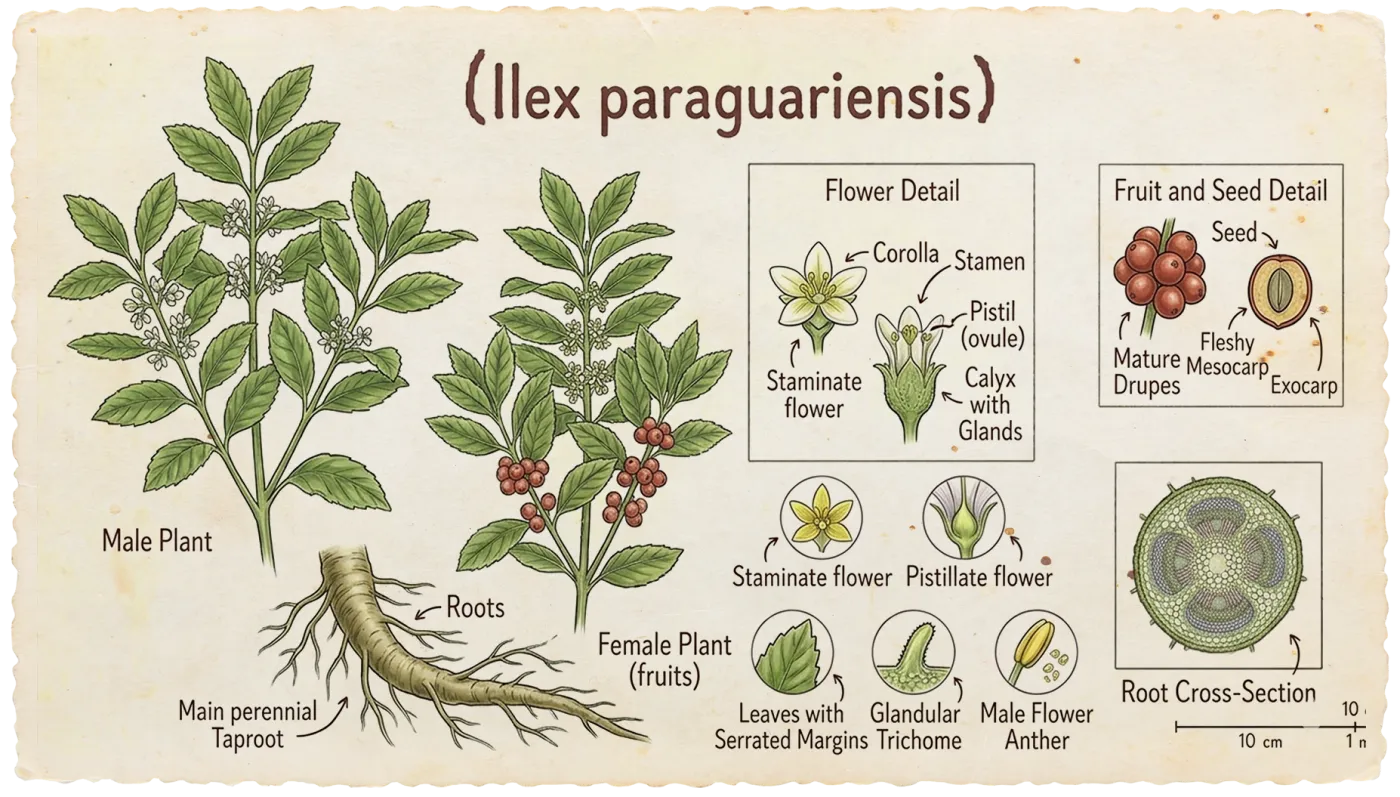
Botanical plate of Yerba Maté (Ilex paraguariensis)
of

of

cookies & such

We use essential cookies to run the shop (cart, checkout, sign-in) and, with your OK, analytics cookies to understand how folks use the site. See our Privacy Policy.