Bear Blend — Celebrating Life Through Ritual
Bear Blend
Sign In Create Account Cart

Skullcap

(Scutellaria lateriflora)

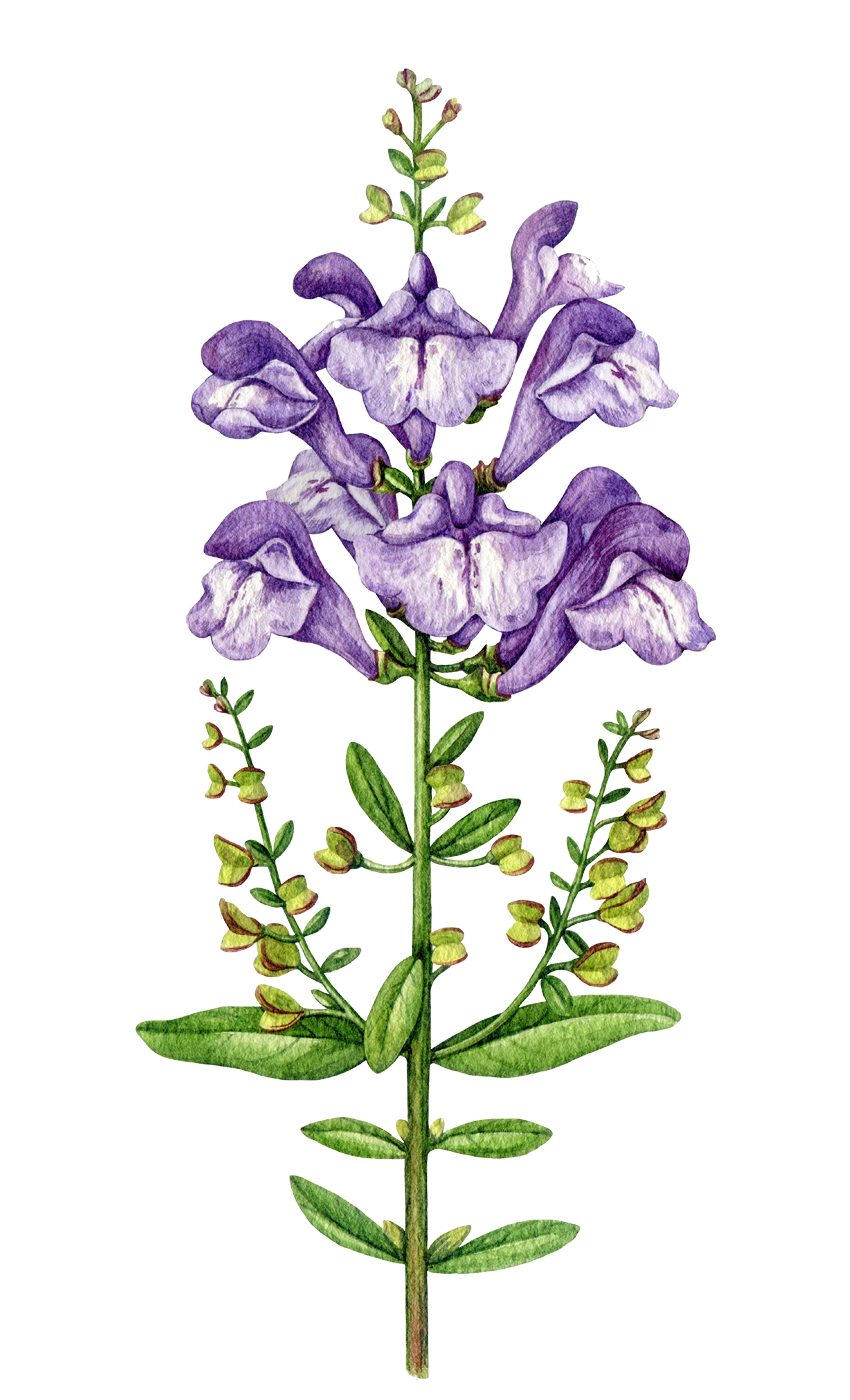
Skullcap botanical illustration

fig. 6 Scutellaria lateriflora

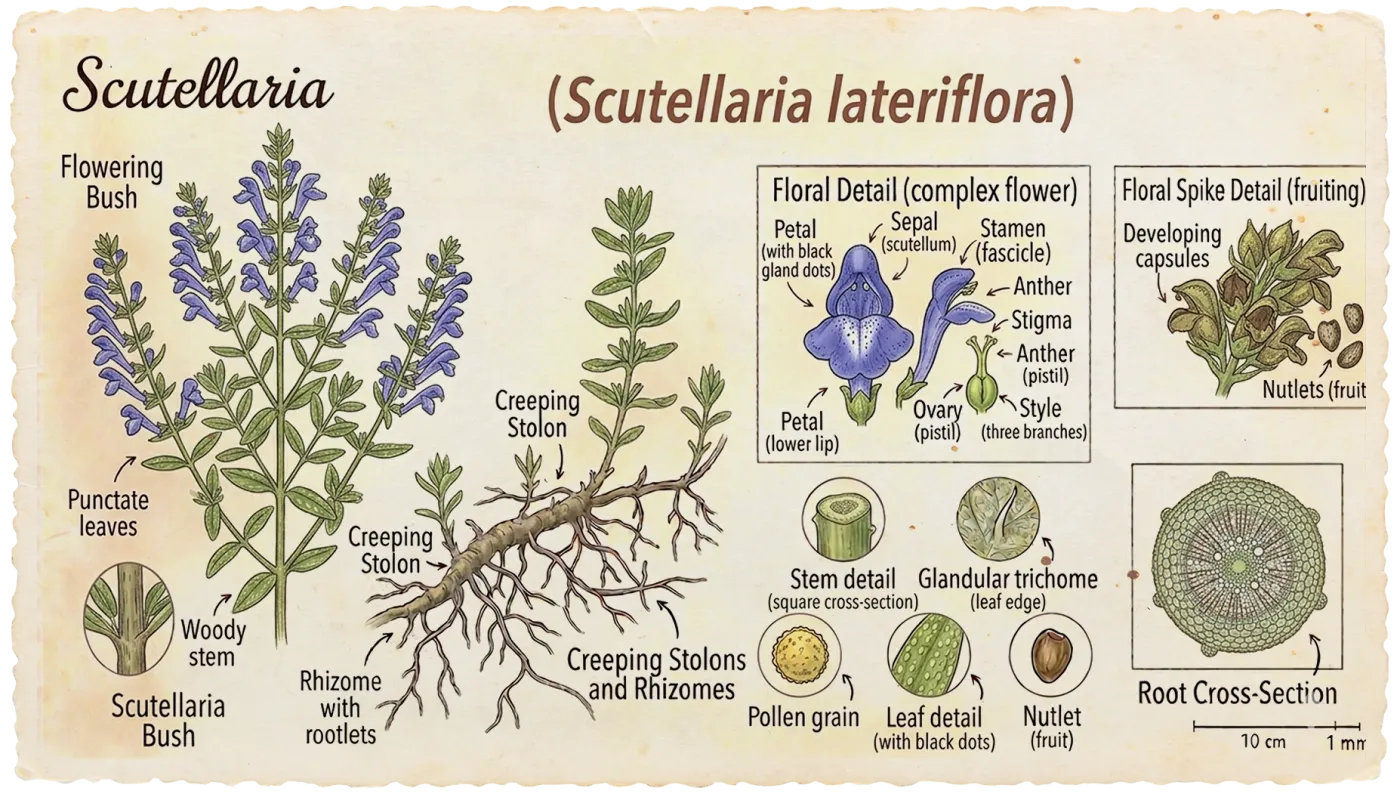
Skullcap arrives quietly, the way the most interesting guests do. A slender, mint-family native of North American wetlands and woodland edges, Scutellaria lateriflora carries small blue-violet flowers that nod along its stems like tiny helmets — which is, in fact, where the name comes from. The Latin scutella means a small dish or shield, a reference to the little cap-like protrusion on each seed pod. The plant seems to know its own aesthetic.

It prefers damp, shaded ground — stream banks, floodplain margins, the quiet understory — and it has been quietly growing there for a very long time, doing what it does: tending the nervous system of anyone willing to pay attention. There is something fitting about a plant with a name that evokes stillness of mind choosing to live in the cool, unhurried places of the forest. The outer world reflecting the inner one, as it always does.

Two species share most of the tradition and modern interest: the North American Scutellaria lateriflora and the Chinese Scutellaria baicalensis, sometimes called Baikal skullcap or Huang Qin. Different continents, different ceremonial lineages, remarkably convergent reputations. Plants have a way of arriving at the same conclusions from different directions.

across time

Tradition & Ritual

Among many Indigenous nations of eastern North America, Scutellaria lateriflora was a plant of women's medicine — used in ceremony and in healing practice to support transitions, particularly around menstruation and childbirth. The Cherokee worked with it as a ceremonial herb and as a plant ally during initiatory passages for young women entering adulthood. It was understood not merely as a physical remedy but as a plant that helped the spirit settle into a new chapter.

In 19th-century American botanical medicine, the Eclectic physicians — a school of practitioners who bridged herbalism and emerging clinical science — leaned heavily on skullcap as what they called a nervine tonic: a plant that didn't merely sedate but genuinely nourished an exhausted or overwrought nervous system. Samuel Thomson and later practitioners wrote of it with the kind of enthusiasm usually reserved for something that actually works. It became one of the most widely prescribed botanicals of the era for nervous exhaustion, what they then called "hysteria," and the particular kind of sleeplessness that comes from a mind that simply won't stop.

In Chinese medicine, Scutellaria baicalensis — Huang Qin — has been a pillar of the materia medica for over two thousand years, appearing in the foundational text Shennong Bencao Jing (The Divine Farmer's Classic of Materia Medica). Its role there is distinct from its North American cousin's: cooling heat, clearing damp, calming what Chinese medicine understands as excess yang rising. Different vocabulary, recognizably related territory. Both traditions circle the same truth: that this plant has something to offer the overheated, overwound human.

In ceremonial smoking traditions, skullcap has been used as a grounding herb — something to bring a scattered mind back to the body before ritual work, or to ease the transition between ordinary consciousness and deeper interior listening. It pairs naturally with intention-setting practices and with any ceremony oriented toward clarity, calm, or dream work.

what it offers

Scientific & Medicine

Modern research has focused substantially on skullcap's flavonoid content, particularly baicalin and baicalein (more concentrated in S. baicalensis) and scutellarein and scutellarin in S. lateriflora. These compounds have attracted interest for their apparent activity at GABA-A receptors — the same receptor system that benzodiazepines work on, though via a different and seemingly gentler mechanism. A small number of human studies, including work published in journals such as Alternative Therapies in Health and Medicine, have suggested that S. lateriflora may support global mood and reduce anxiety without impairing cognition or energy — which, if you've ever experienced a nervine that simply knocked you flat, is a meaningful distinction.

The plant also contains iridoids, tannins, and volatile oils, and researchers have noted antioxidant and neuroprotective properties in laboratory settings. The honest summary: the science is genuinely interesting, still incomplete, and worth watching. What is well-established is that skullcap has a very long empirical track record across multiple independent healing traditions — which is itself a kind of evidence, even if it doesn't fit neatly into a clinical trial.

As with many herbs, the smokable form delivers volatile compounds directly and rapidly, which is one reason it has been used in ceremonial smoking contexts for calm and focus rather than as an extract or tea. This is informational only — skullcap is not a substitute for professional medical care, and individual responses to herbs vary.

the old stories

Legends & Myths

The name alone carries a small mythology. In 18th and early 19th-century America, skullcap was widely known as Mad Dog Skullcap — a name that captures both the hyperbole of folk medicine and a real, if desperate, historical use. Rabies was a terror of the pre-vaccination era, and a plant that calmed convulsions and nervous paroxysms was pressed into service against it. Whether it helped is lost to time and the limits of empirical observation. What survived is the name, which is considerably more dramatic than the plant's quiet demeanor would suggest.

There is also a persistent piece of botanical lore worth sitting with: skullcap belongs to the mint family, Lamiaceae — a family so successful at colonizing human consciousness and cuisine that it includes lavender, rosemary, basil, sage, thyme, and lemon balm, among hundreds of others. The mint family is, in a real sense, one of the great botanical civilizations of the plant kingdom, having followed human settlement and trade routes across every continent. Skullcap is the quiet scholar in a very accomplished family.

In the language of flowers — the Victorian practice of floriography, in which specific blooms carried coded social meanings — skullcap was associated with composure and the steadying of the mind. Whether the Victorians were drawing on empirical observation or simply responding to the plant's visual character (those small, contained, helmet-like flowers), they landed somewhere accurate. The plant has been saying the same thing across multiple languages and centuries: settle in, slow down, the mind has a floor.

from the bear

Bear Originals

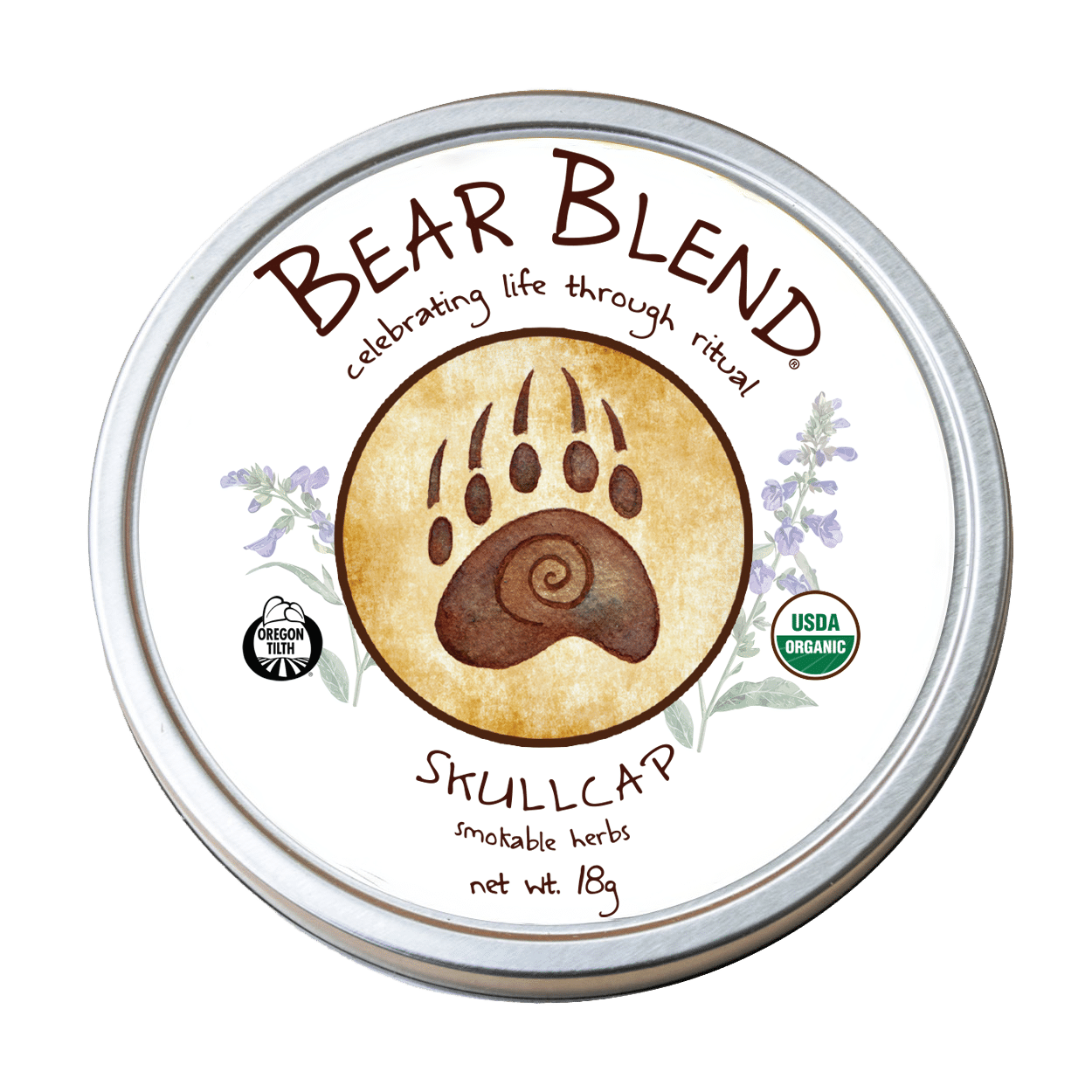
Skullcap fits naturally into the Bear Blend ethos — it is a plant with genuine ceremonial roots, a smokable tradition, and a character that invites the kind of intentional, unhurried engagement we try to build into everything we offer. We carry skullcap as a single smokable herb, certified-organic and sourced with the traceability we hold all our botanicals to.

As a standalone herb, it makes an excellent addition to a personal blend for those drawn to grounding, calming ceremonial work — before meditation, before sleep ritual, or simply as a way of marking the boundary between the busy outer world and the quieter interior one. It blends well with mugwort for dream-oriented ceremony, with passionflower for deeper relaxation work, and with mullein as a smooth base that lets the character of each herb speak clearly. For those curious about building their own ceremonial blend, our FAQ on mixing herbs is a good place to start.

The ritual context we'd offer for skullcap is simple: this is a plant for the moments before the moment. Before ceremony, before sleep, before any practice that asks you to arrive fully present. Roll it with intention, breathe slowly, and let the mind find its floor.

Cautions & Contraindications

Skullcap is generally considered well-tolerated when used as a ceremonial smokable herb in moderate amounts. There are no widely established serious contraindications for occasional use by healthy adults. That said, a few notes worth keeping in mind:

  • Liver concerns: There have been rare case reports of liver toxicity associated with skullcap products, though these are often traced to adulteration with Teucrium species (germander) rather than authentic skullcap. Sourcing from a reputable, traceable supplier matters here — which is exactly the kind of sourcing we commit to.
  • Pregnancy and breastfeeding: Traditional sources have associated skullcap with uterine stimulation; those who are pregnant or breastfeeding should avoid it and consult a qualified practitioner.
  • Sedative interactions: Because skullcap may have calming effects on the nervous system, those taking pharmaceutical sedatives, anti-anxiety medications, or other CNS depressants should consult a healthcare provider before use.
  • Authenticity: Commercial skullcap products have historically been subject to adulteration. Certified-organic, traceable sourcing significantly reduces this risk.

As with any herb, if you have a health condition or take medication, a conversation with a qualified practitioner is the wisest starting point. This entry is informational, not medical advice.
take it home

Buy Skullcap

Pure, organic Skullcap available in our shop.

Shop Skullcap Smokable Herbs · $9.95 →
Botanical plate of Skullcap (Scutellaria lateriflora)
of

of

cookies & such

We use essential cookies to run the shop (cart, checkout, sign-in) and, with your OK, analytics cookies to understand how folks use the site. See our Privacy Policy.