
Star Anise
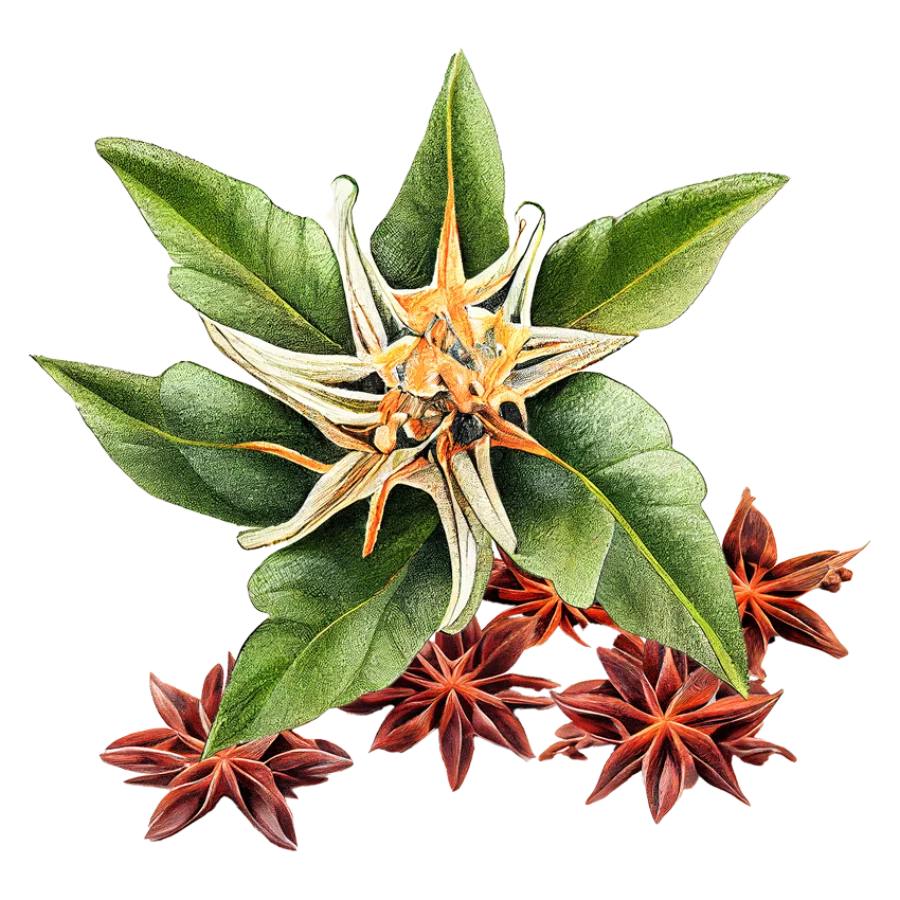
across time
Tradition & Ritual
what it offers
Scientific & Medicine
the old stories
Legends & Myths
from the bear
Bear Originals
Cautions & Contraindications
Star anise as commonly used in culinary and herbal contexts is generally considered safe for most adults. However, a meaningful caution worth knowing: Chinese star anise (Illicium verum) should not be confused with Japanese star anise (Illicium anisatum), a closely related species that is toxic and has been responsible for serious adverse reactions, particularly in infants given teas prepared from adulterated or misidentified material. Reputable sourcing — which is a non-negotiable for us — is the practical safeguard here.
Anethole, the primary active compound, has demonstrated estrogenic activity in some laboratory studies, which is worth noting for individuals with hormone-sensitive conditions, though the concentrations involved in typical herbal use are far below those studied pharmacologically. As always, those who are pregnant, breastfeeding, or managing specific health conditions should consult a qualified healthcare provider before incorporating new herbs into regular practice. Star anise essential oil is considerably more concentrated than the dried herb and carries a different risk profile — the two should not be treated as interchangeable.
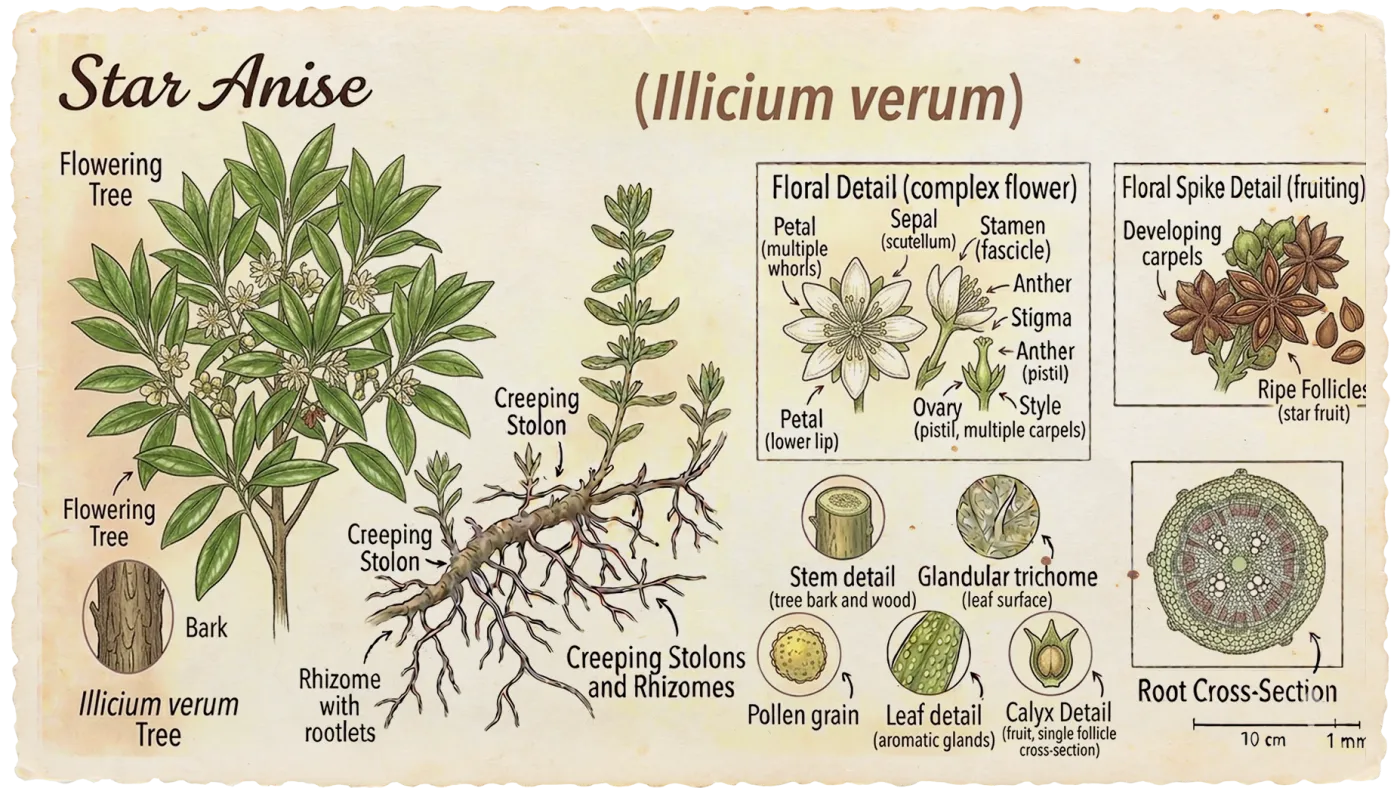
of